


THE ART OF SIMPLICITY
I.M. Pei
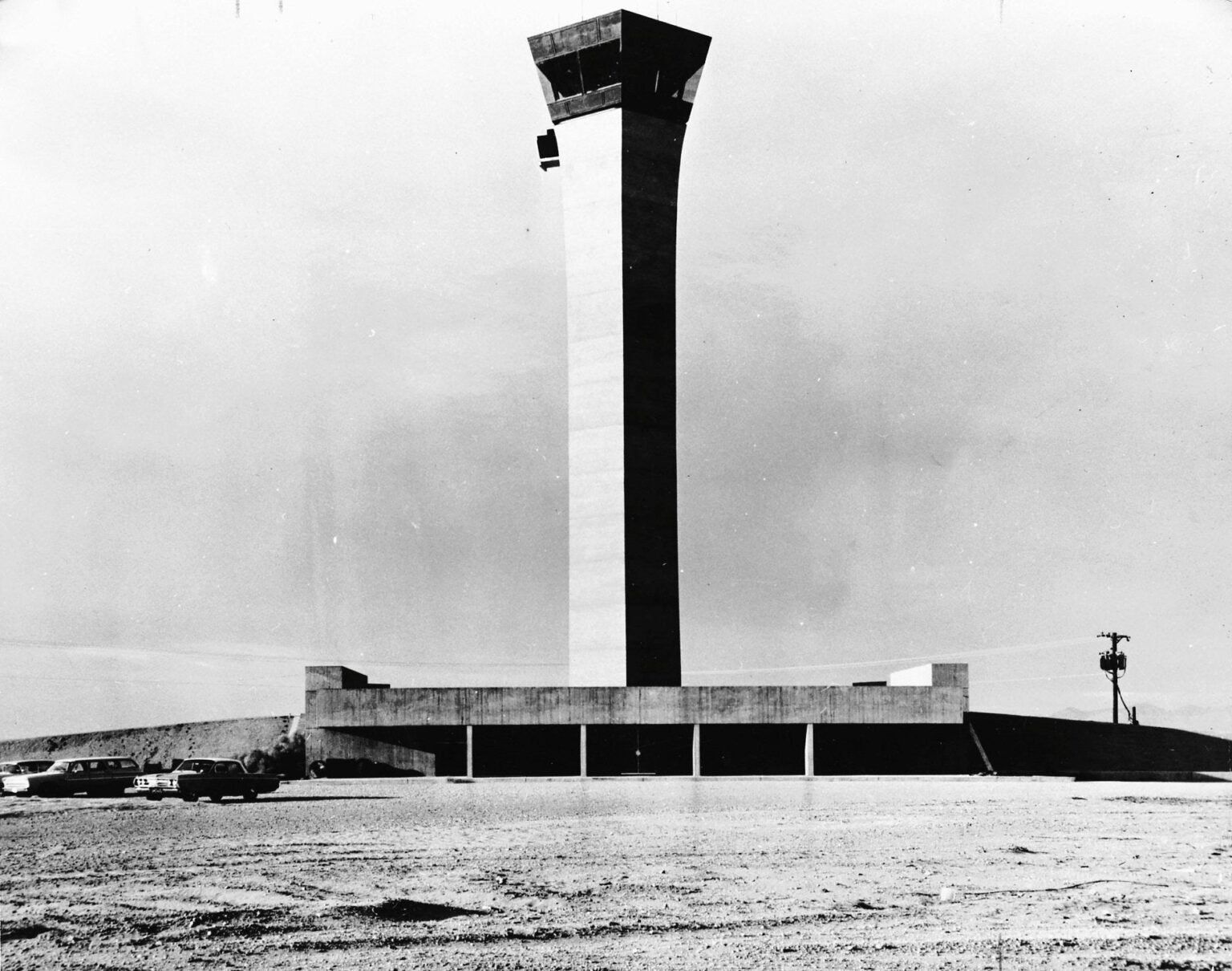
Air Traffic Control towers are one of those things that you can’t miss when approaching an airport, but at the same time they are kind of overlooked. They stand like tall sentinels over the runways, keeping watch as aircraft come and go. However, when I learned that I. M. Pei was in charge of designing the blueprint for the U.S. towers in the 60s and 70s, my view about them changed radically.
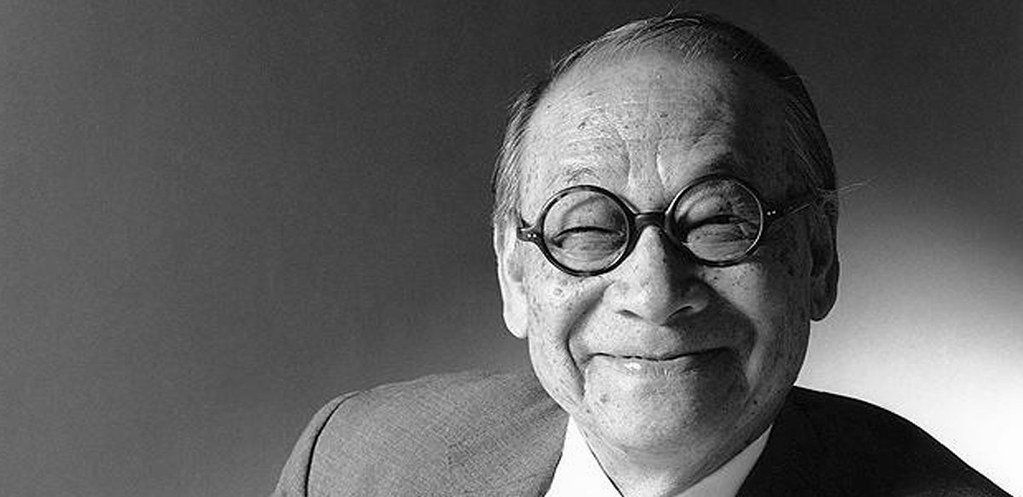
Ieoh Ming Pei
Ieoh Ming Pei (1917–2019) was a Chinese-American architect renowned for his elegant synthesis of modernist principles with sharp geometric forms. Born in Guangzhou and raised in Shanghai, Pei moved to the United States at age 17. After studying at MIT and the Harvard Graduate School of Design, where he later worked along Walter Gropius and Marcel Breuer from the Bauhaus movement in Germany, Pei went on to build a prolific career that spanned more than six decades that was recognized not only by the public, but also awarded him many prestigious prizes.
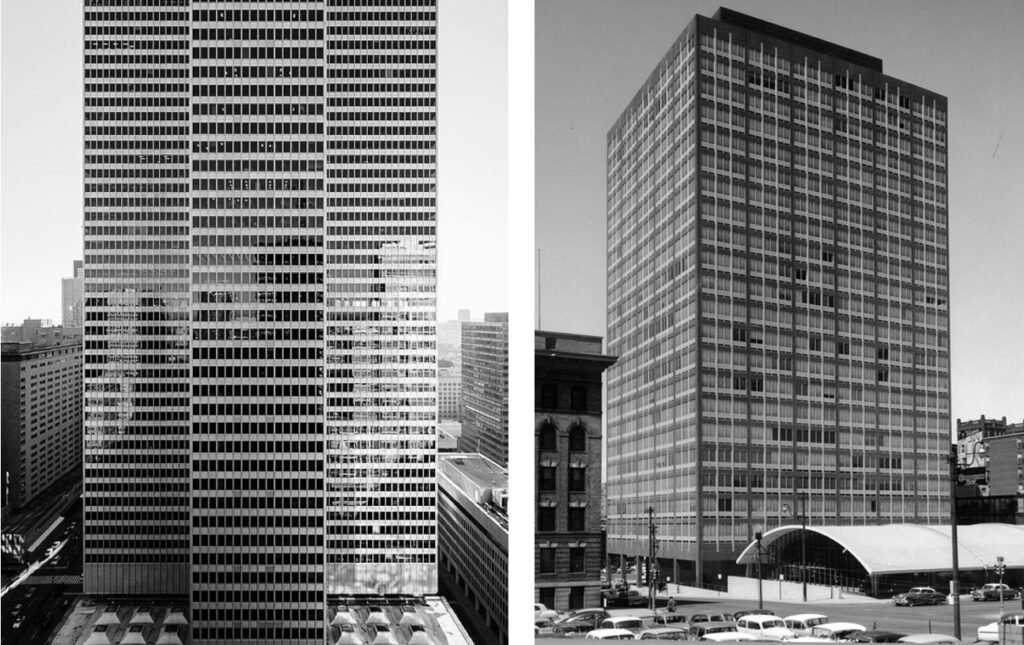
Place Ville-Marie in Montreal and Mile High Center in Denver
In 1948 Pei joined the firm of Webb & Knapp in New York City, as director of the architectural division. At the time we was focused on urban projects such as the Mile High Center in Denver, the Hyde Park Redevelopment in Chicago, and the Place Ville-Marie in Montreal.
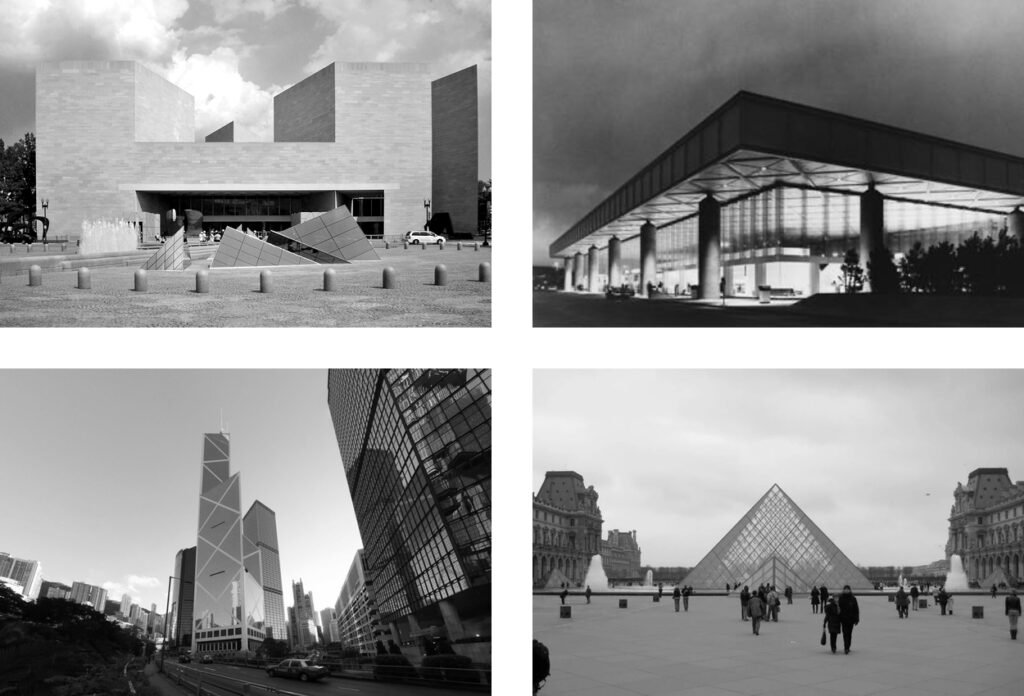
Clockwise – National Gallery East Building, Sundrome Terminal, Bank of China Tower, Louvre Pyramid
In 1955, when Pei founded his own firm, I.M. Pei & Associates, he became known for major public and cultural projects, including the National Gallery of Art’s East Building in Washington D.C., the Sundrome Terminal in New York, the Bank of China Tower in Hong Kong, and most famously, the Louvre Pyramid in Paris (images above). He is also known for the Mesa Laboratory of the National Center for Atmospheric Research in Boulder, the Everson Museum of Art in Syracuse, the JKF Library in Boston, and rarely recognized for the design of the Air Traffic Control Towers prototypes.
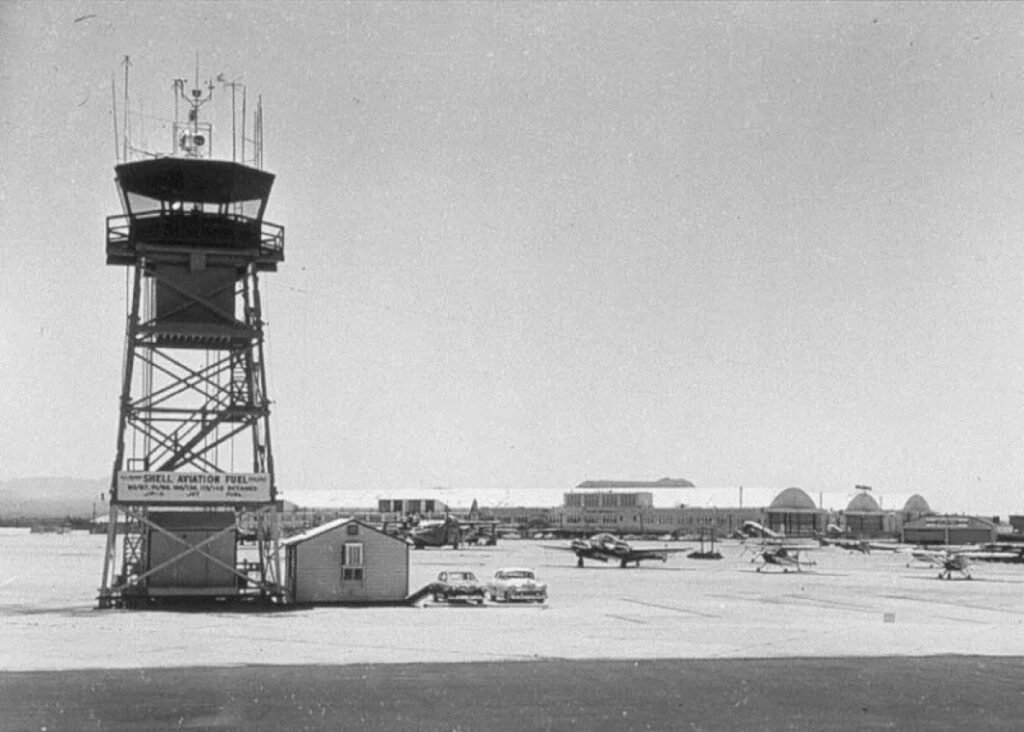
Air Traffic Control Tower in Tuckson 1953
Pei and the Air Traffic Control Towers
In the late 1960s and early 1970s, the United States was still living under the glow of the Jet Age. Air travel had grown fast after World War II, and airports needed to grow with it. The Federal Aviation Administration (FAA) realized that its air traffic control towers were inconsistent in design and often outdated.
After a bid against other architectural companies, Pei and his team were commissioned to create standardized tower prototypes that could be repeated, adjusted, and scaled for different airports around the country.
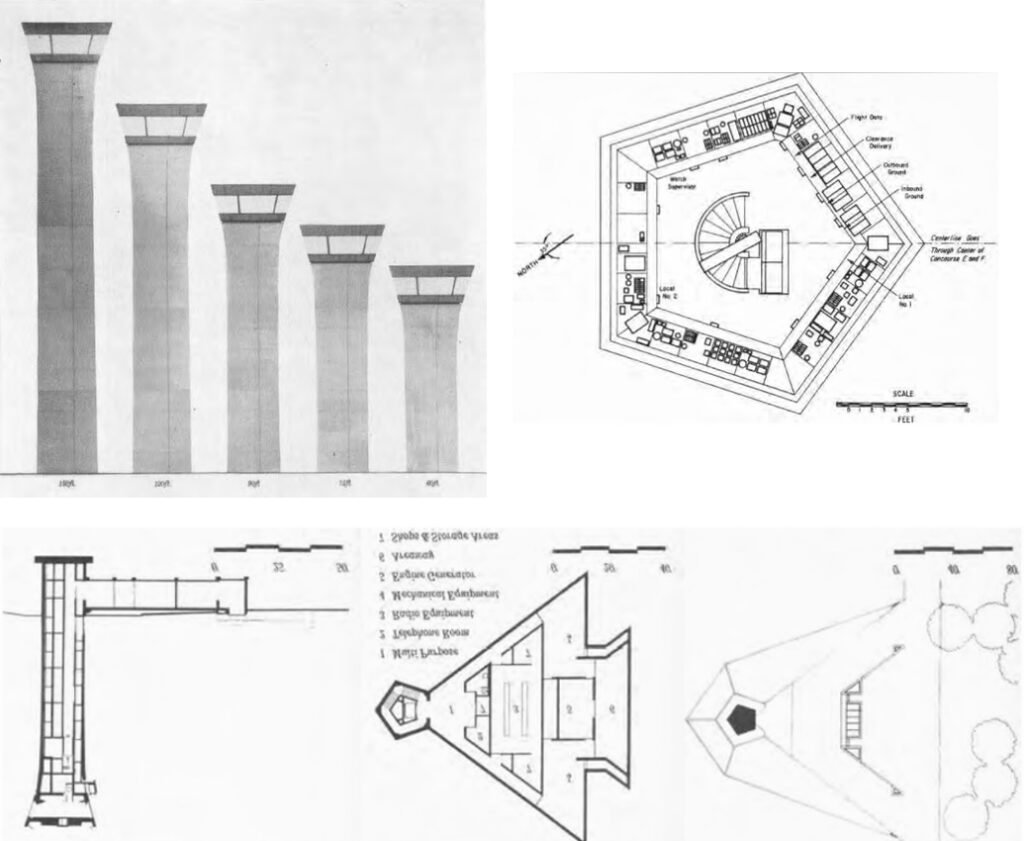
Air Traffic Control Towers Blueprints
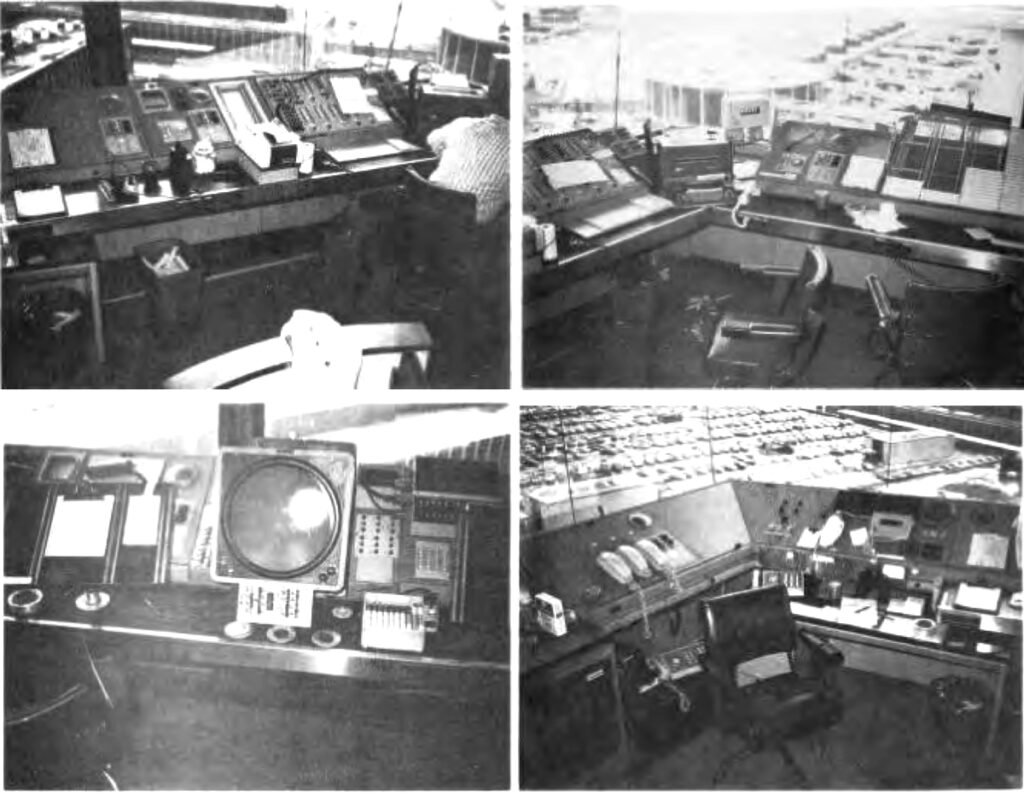
Tower cab interior
Pei’s firm created 13 variations so the FAA could mix and match the basic features according to airport needs. His design team settled on five basic concrete shaft heights between 60 feet and 120 feet. The 150 feet prototype tower at Chicago O’Hare International Airport was the exception.
The towers had a pentagonal cab with single glazing at the corners of the windows to increase visibility. Inside the cabs, which came in two sizes, controllers worked at a unified console built taking in consideration their line of sight. This pre-made cabs could be simply lifted atop the shafts with a crane.
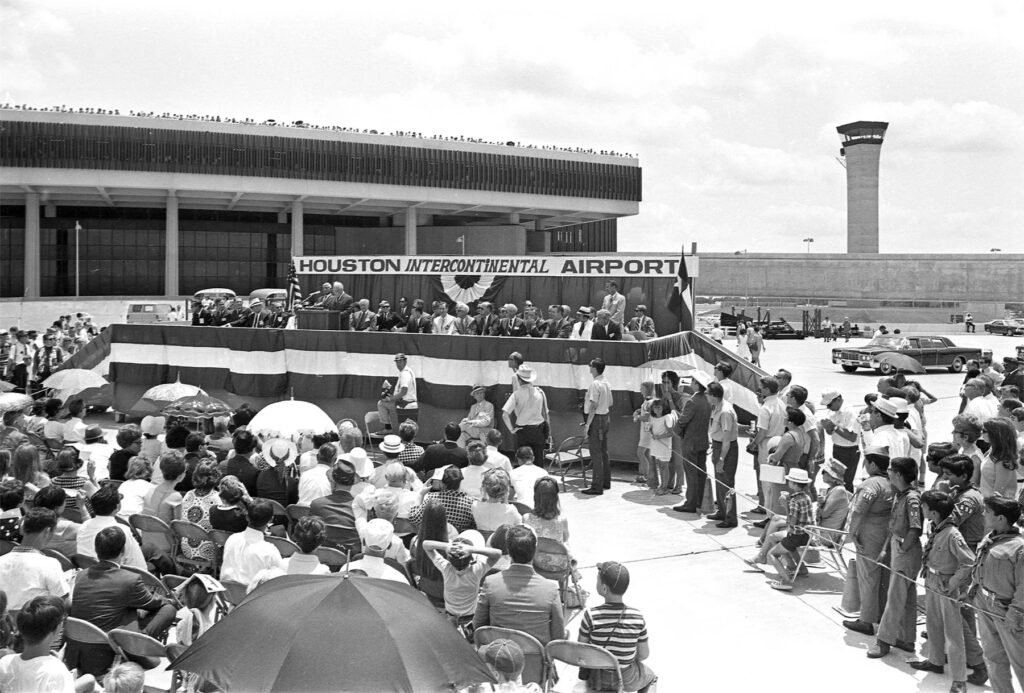
Pei Tower Prototype at the Houston Intercontinental Airport
It was decided that the towers were away from the actual airport terminals, to increase the visibility of the controllers in the cab, and the equipment and radar rooms were located in the underground base. The initial contract was for around 70 towers, but only 16 were actually constructed for unknown reasons. I found a forum entry that lists 13th of them:
Andrews Air Force Base (ADW)
Bush Intercontinental Airport (IAH)
Columbia Metropolitan Airport (CAE)
Elmendorf Air Force Base (EDF)
El Paso International Airport (ELP)
Great Falls International Airport (GTF)
Huntsville International Airport (HSV)
Indianapolis International Airport (IND)
Lambert-St. Louis International Airport (STL)
O’Hare Airfield (ORD)
Sacramento International Airport (SMF)
Tampa International Airport (TPA)
Westchester County Airport (HPN)
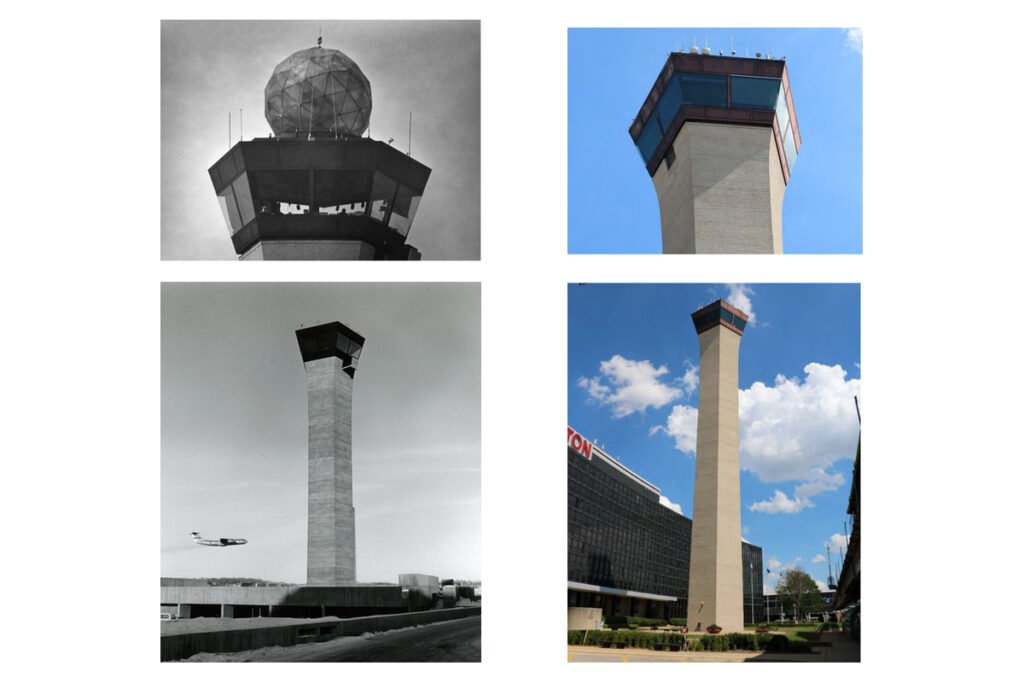
O’Hare International Airport in Boston
For Pei, the Air Traffic Control Tower prototypes were not about creating a signature landmark like a museum or a memorial. What tides them to his other work is the clear geometry, precision and innovative design. For him and his team, it was a chance to bring clarity and order to a growing national system. He was inspired by function, modularity, and the idea of architecture as a tool for progress. In many ways, this matched the spirit of aviation itself. For aviation fans like me, these towers are part of the larger Jet Age story, an era when design was all about progress and technology.
Image credits
Denver Public Library
Library of Congress
O’Hare International Airport
Matthew Bisanz
If you own any of the visual material displayed on this article and I haven’t mentioned it, please let me know to include it.
