

Dreaming of the Future
Theme Building
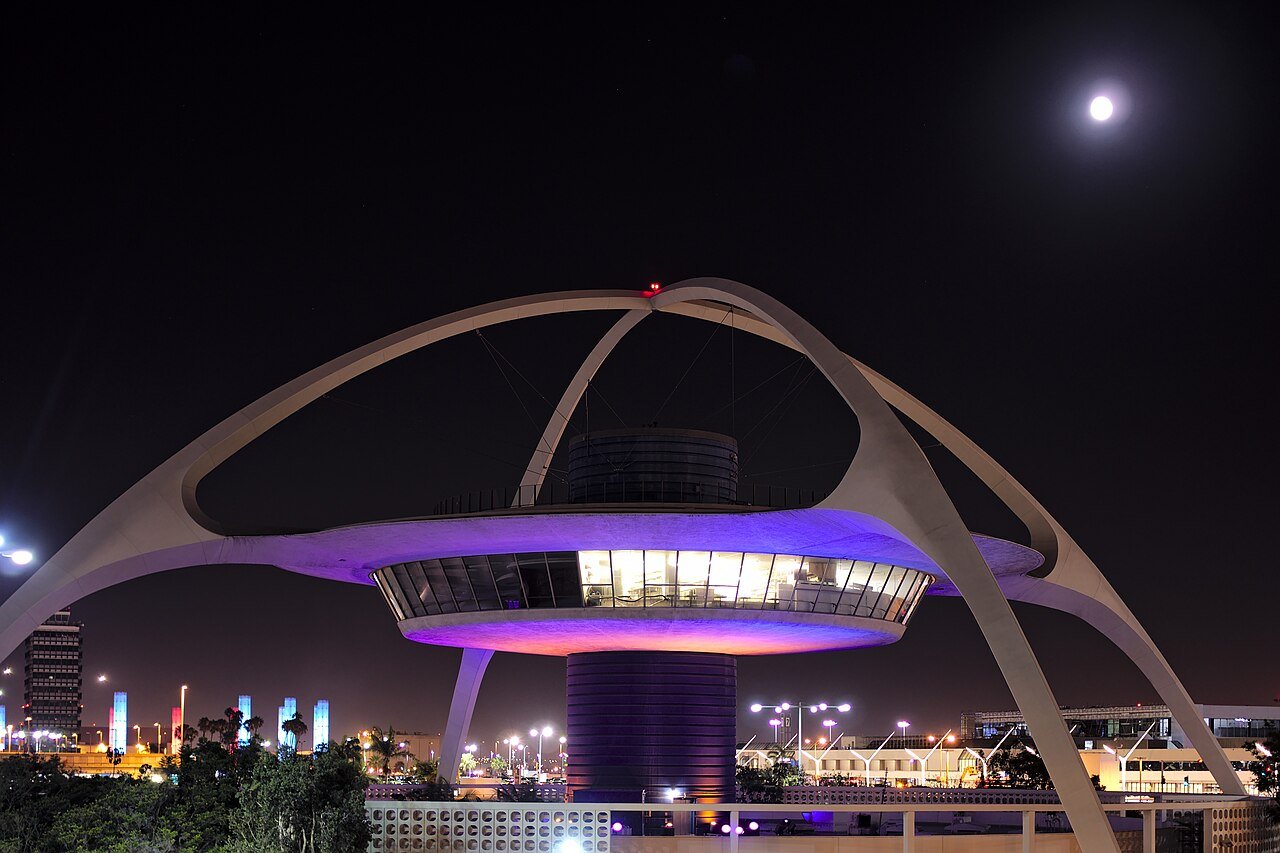
Every time I travel from the Los Angeles airport – LAX, I can’t help but be starstruck by the Theme Building. There is something about it that I can’t explain in words. One thing is to see it in pictures, another is to look at it right there, before your eyes. It seems to have jumped to reality from a sci-fi movie, which is not entirely untrue. Rumour has it that William Pereira, one of the lead architects, influenced by his brother Hal, the art director of the 1954 classic film War of the Worlds, might have intended the Theme Building to look like a landing spaceship.
The Theme Building is a structure that represents Googie architecture at its best. It has the clean lines of Mid-Century Modern with a twist of futurism, which was the vision of this period. This architectural marvel, part of the LAX airport terminal project, was built from 1960 to 1961.
The Beginning
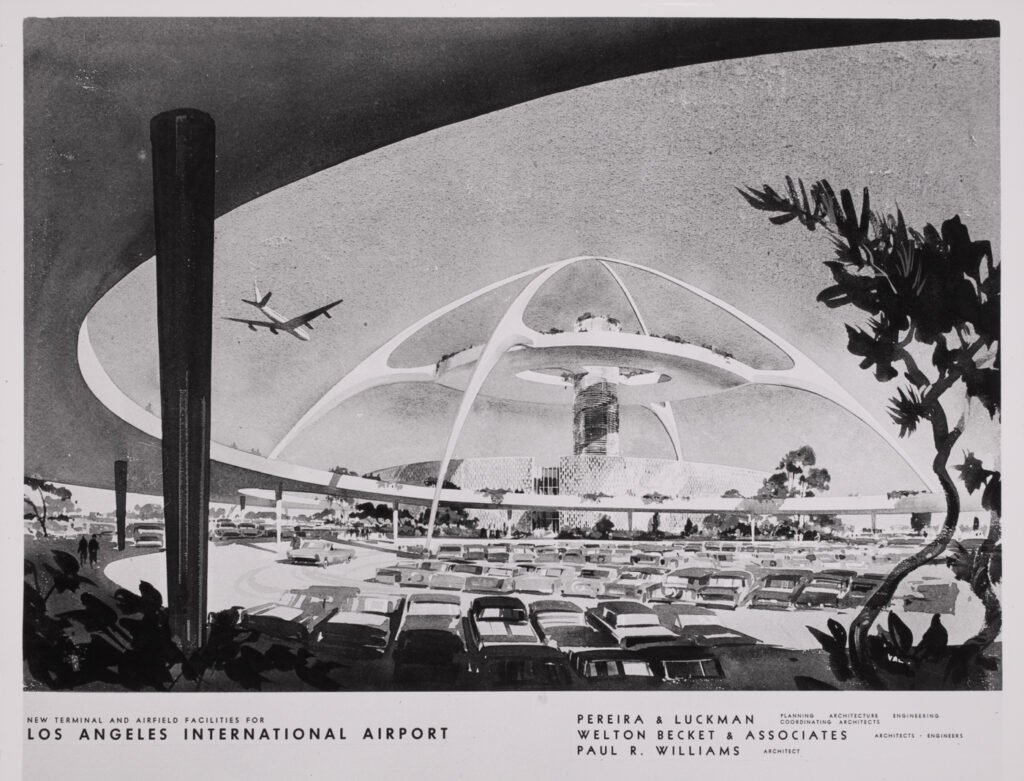
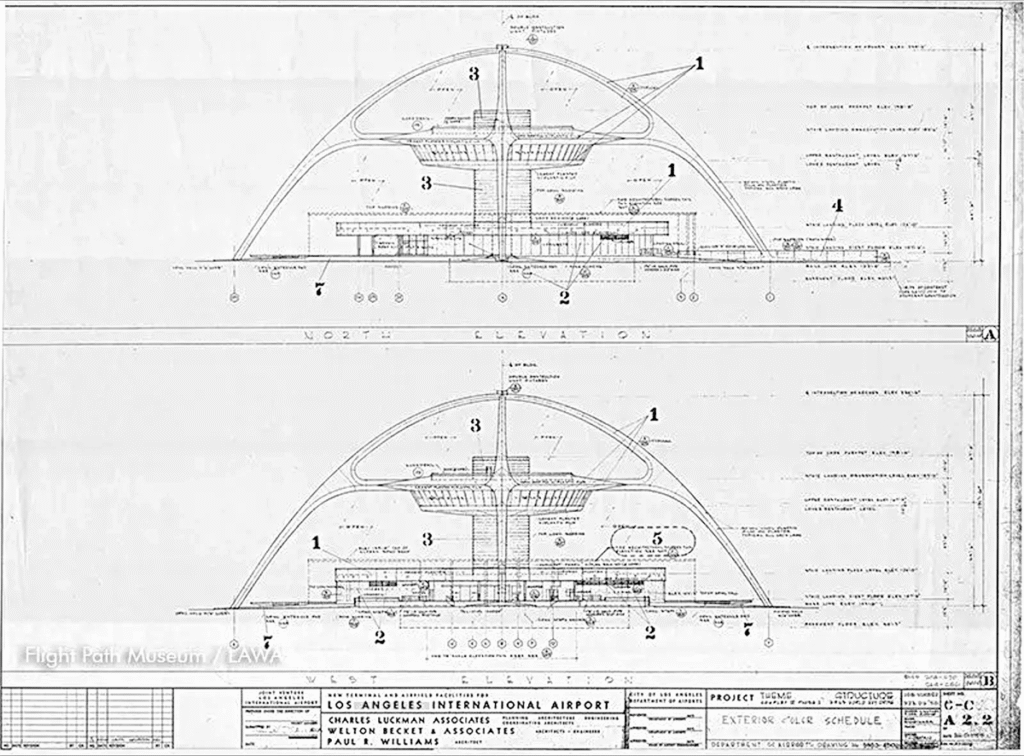
The original design for the Theme Building was envisioned by James Langenheim and developed by the Pereira & Luckman Associates team. There were two other architectural firms, Welton Becket and Associates and Paul Revere Williams, involved in the overall design of the LAX airport, but they didn’t actively participate on this specific building.
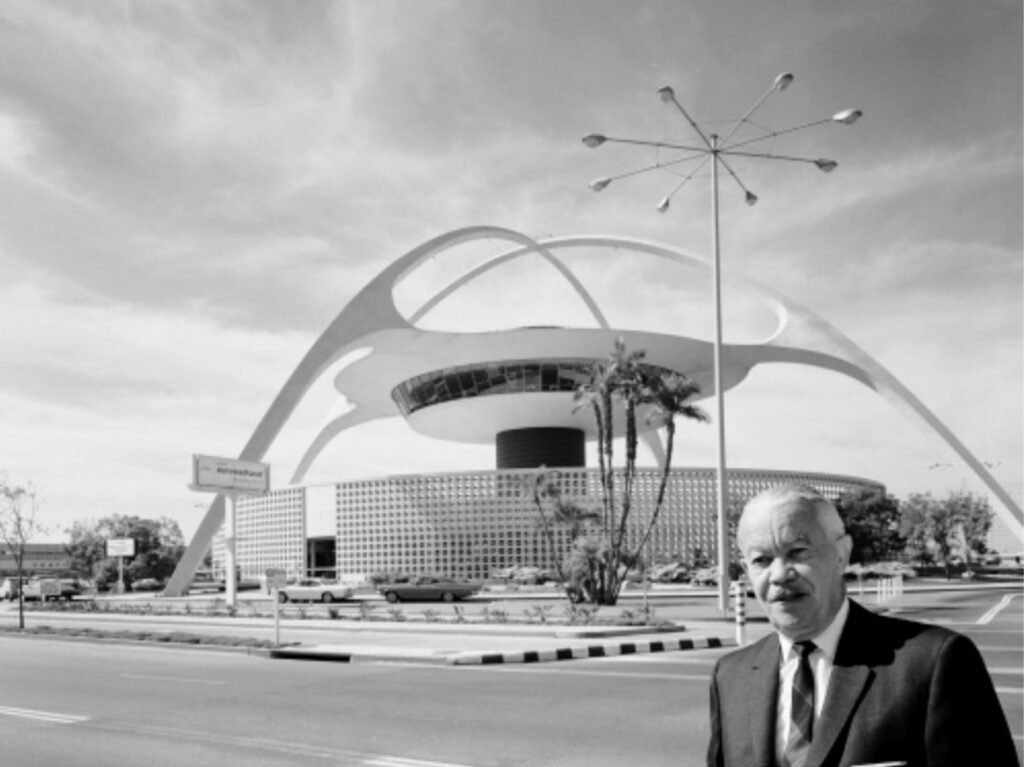
Architect Paul Revere Williams
This picture of architect Paul Revere Williams (above) in front of the building has contributed to the misunderstanding. In fact, the Paul Revere Williams Foundation mentions on their website, “Despite the many articles and books crediting him, Williams was not on the design team for the Theme Pavilion. He was a member of the joint-venture for the entire airport project.”
The Vision
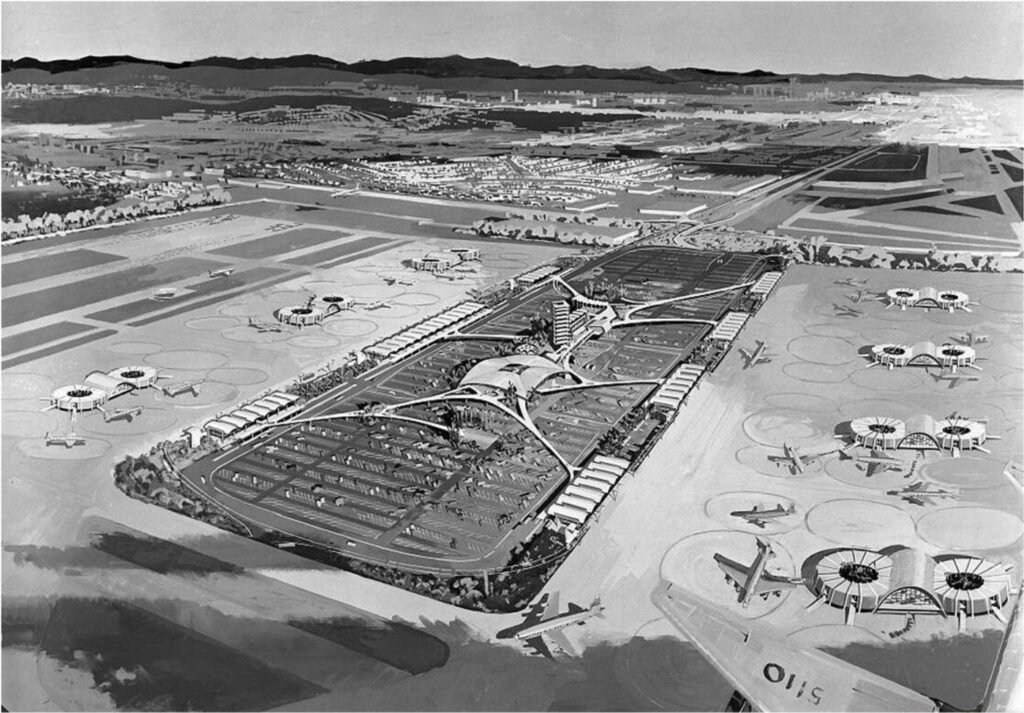
Original Concept with Glass Dome
The initial design for LAX was composed of satellite buildings connected to a gigantic, futuristic glass dome made of shells in the centre of the airport. Richard Bradshaw was commissioned as the structural engineer because he was the best-qualified person for this type of structure. After the plan was scaled down, the Theme Building stood where the glass dome would have been located. The general contractor was Robert E. McKee, and the landscape architect was Robert Herrick Carter.
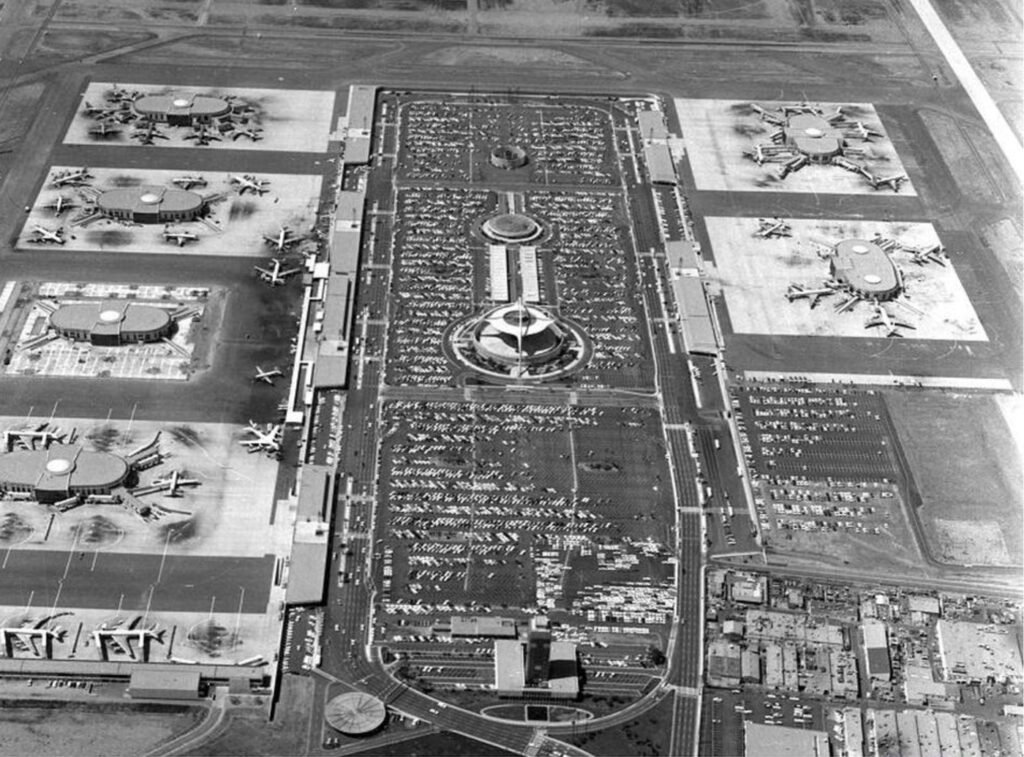
LAX final configuration with the Theme Building in the centre
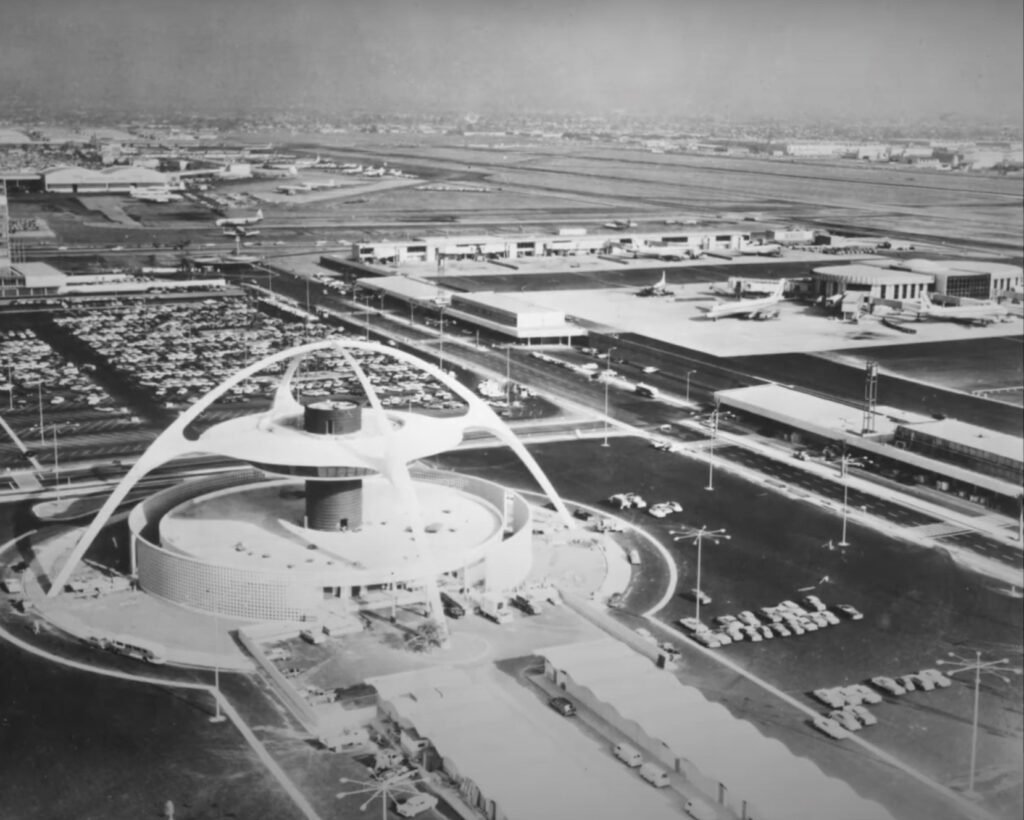
The Construction
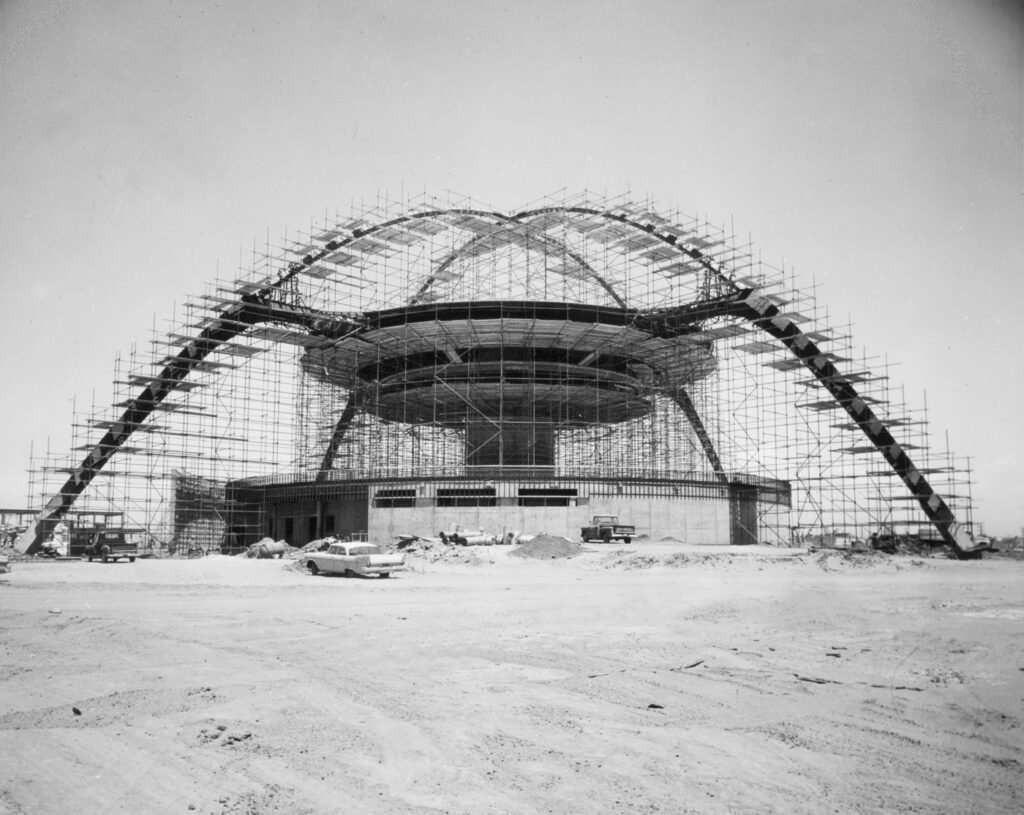
This was the first time giant supporting steel arches were used, including horizontal legs that tie them to the round central core of the building. Hollow, stucco-covered steel trusses create the illusion that the legs are conjoined. Approximately 900 tons of structural steel were used for the entire building. The arches were shipped to the site by truck during light traffic hours due to the size of the pieces. The core is reinforced concrete, 85 feet high and 30 feet in diameter, with three passenger elevators and one freight elevator.
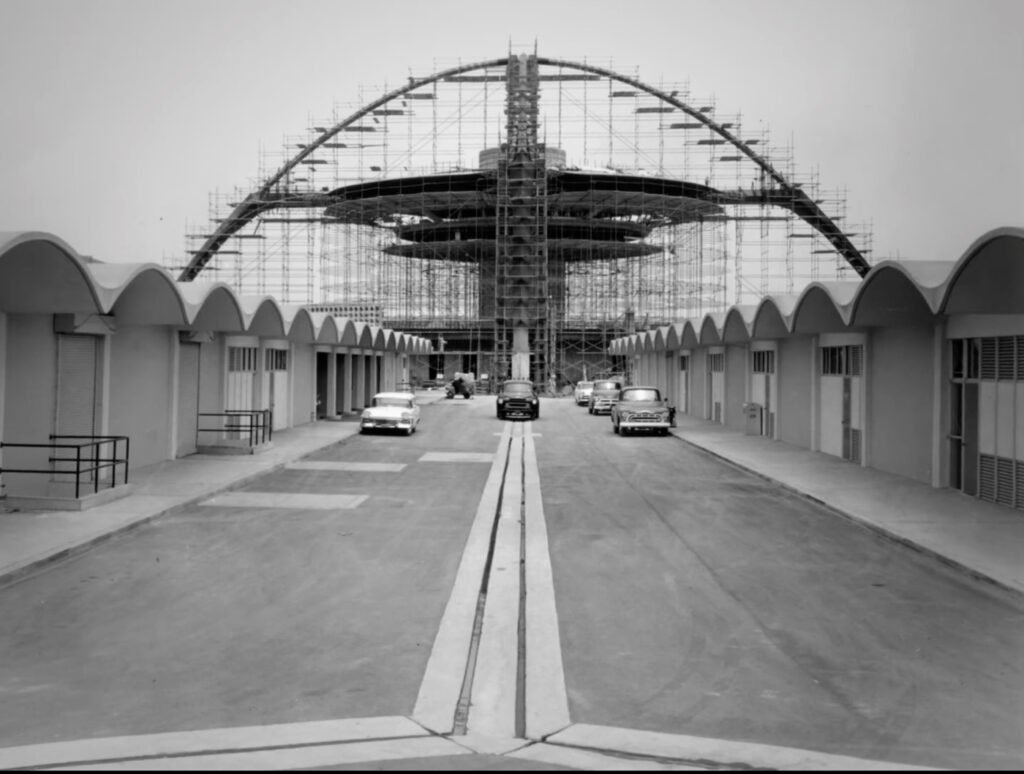
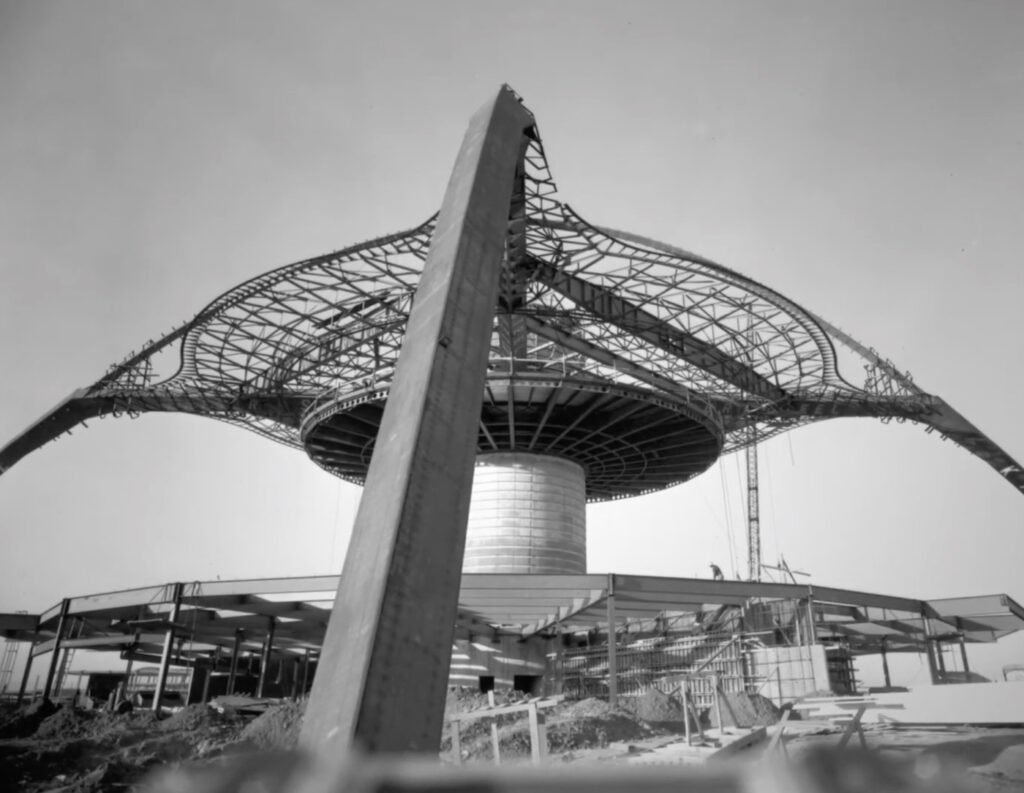
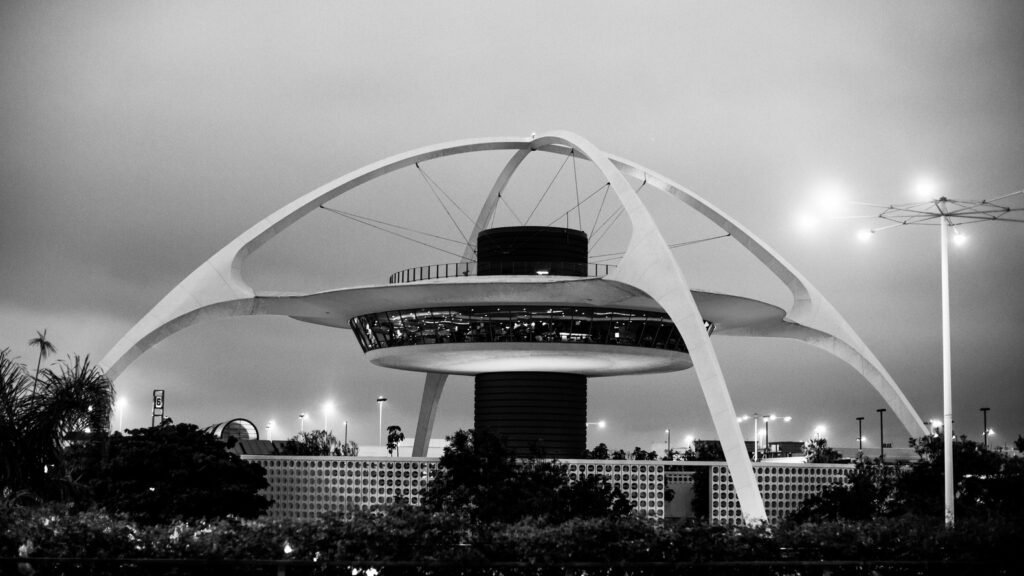
In the centre of the structure, the Theme Building had an elevated restaurant with glass walls. At first, the restaurant rotated slowly, providing a commanding 360° panorama. Later, it became stationary, but people could still enjoy the view. On top of the restaurant there was an open observation deck that also had the same views, so the restaurant patrons and other visitors could enjoy watching the aircrafts taking off and landing. The total cost of the Theme Building was $2.2 million, a large sum at the time.
Reimagining the Future
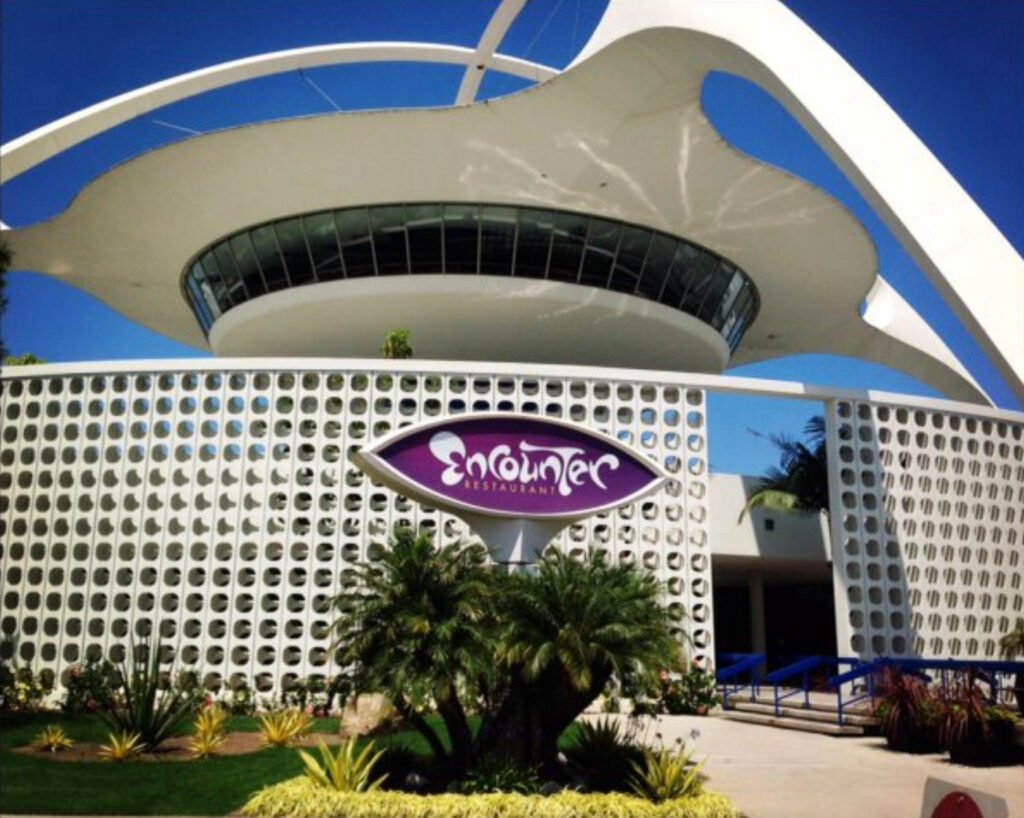
In 1993, the Theme Building was designated as Historical-Cultural Monument (Number 570) by the City of Los Angeles. Later, the building was retrofitted to house the Encounter restaurant, a project led by the Walt Disney Imagineering department, which gave the building a retro-themed interior and fresh lighting in 1997.
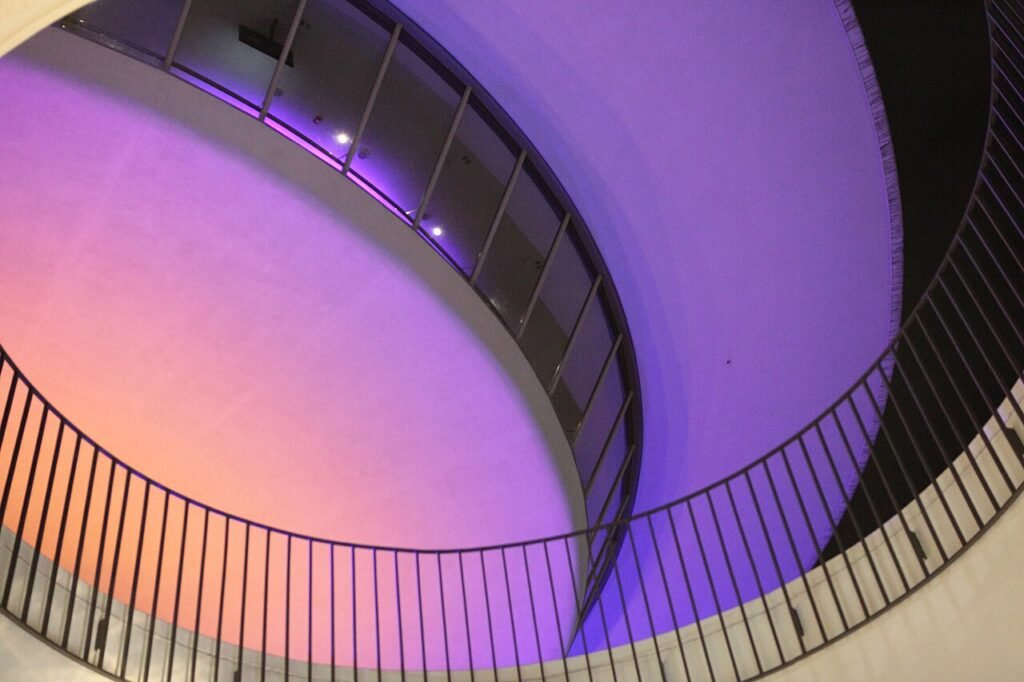
The design was intended to reflect a futuristic aesthetic, creating an experience that echoed both the architecture of the building and the excitement surrounding air travel during the late 20th century. The interior of the restaurant was sleek, with clean lines, high-tech materials, and a sense of openness.
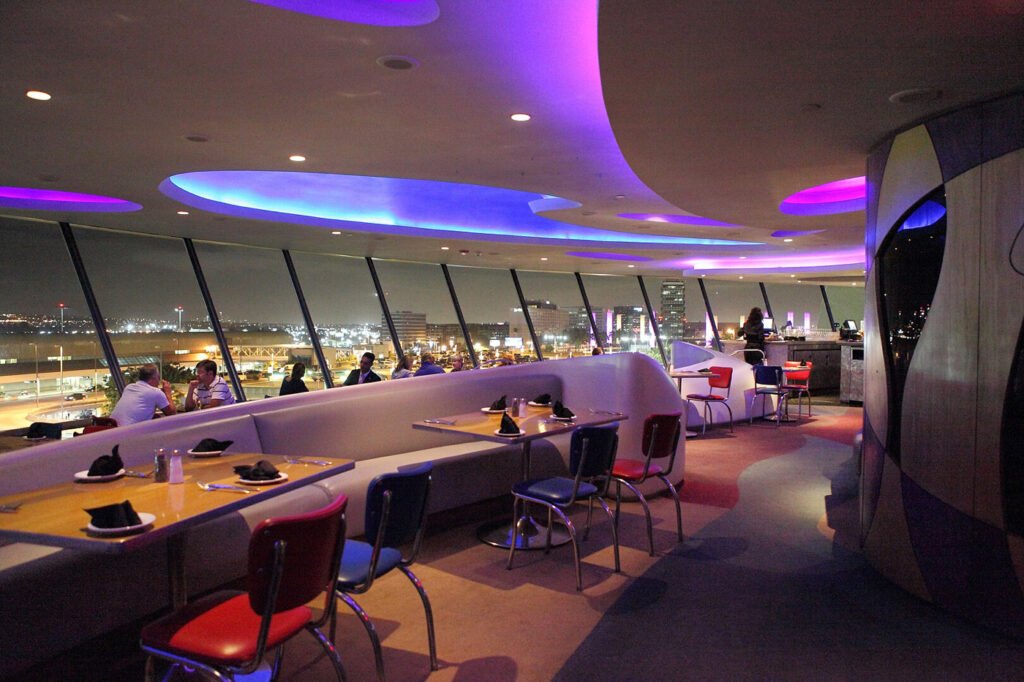
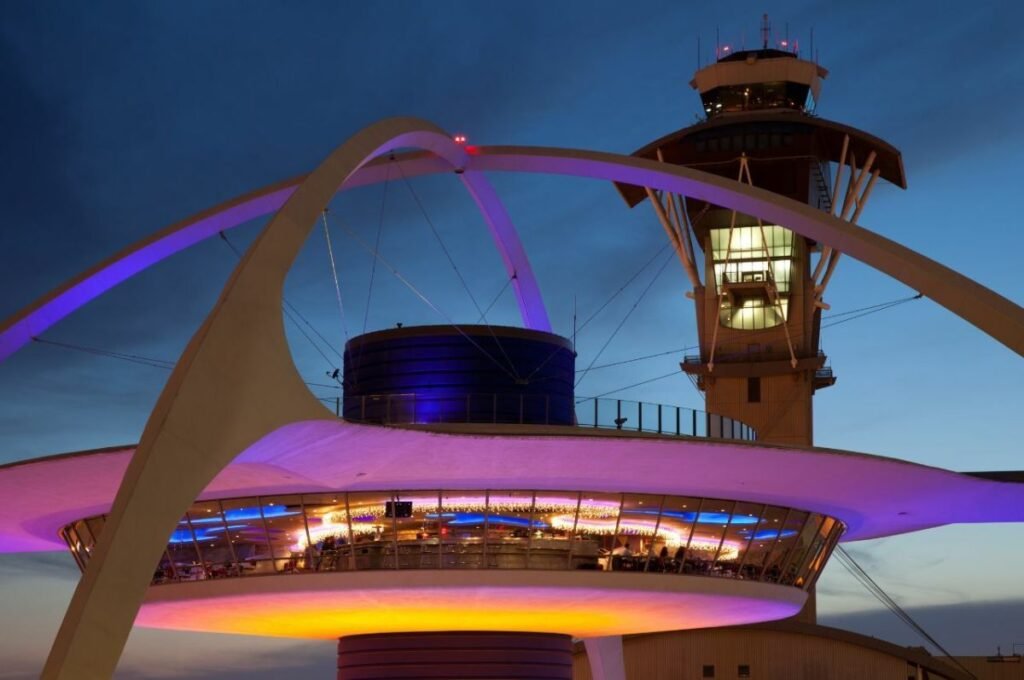
One of the standout features of the restaurant’s design was the large, circular dining area, the bold colours, chrome finishes, and geometric shapes, all of which contributed to the sense of a sleek, futuristic environment. The furniture was a mix of contemporary pieces, with many incorporating smooth, curved lines that complemented the organic forms of the building’s exterior. Lighting was another critical aspect of the design, with retro-futuristic, high-tech fixtures that helped to create a vibrant, yet intimate dining atmosphere.
Reinforcement
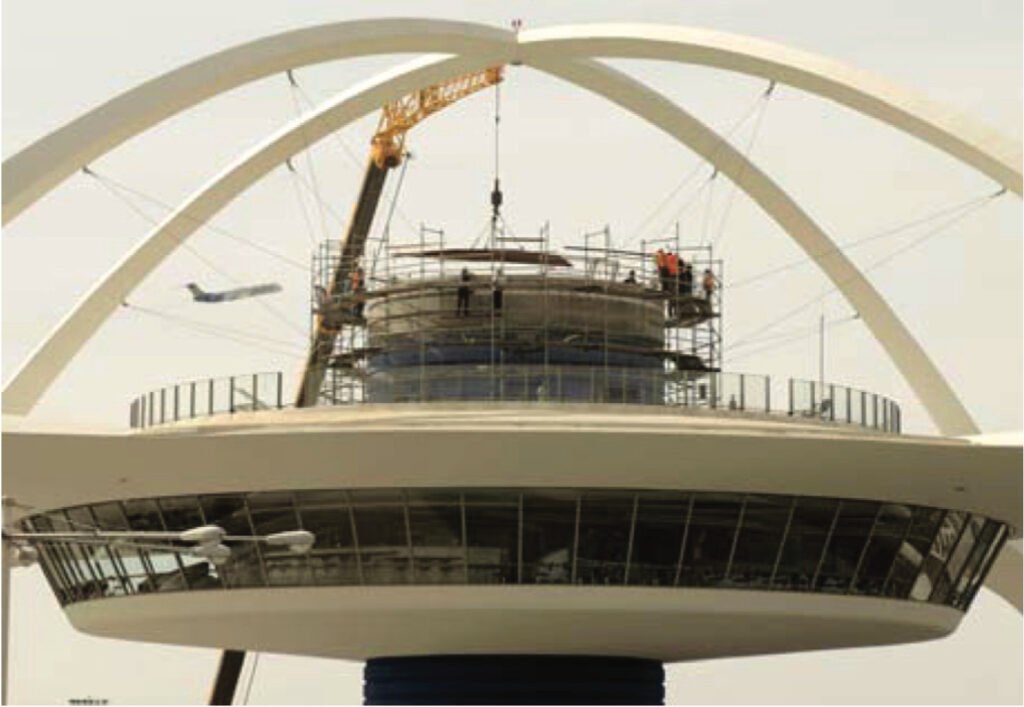
The observation deck was closed for security reasons after the September 11 attacks. About six years later, an enormous piece of stucco weighing 500 kg (1,100 pounds) fell from one of the arches above the restaurant. That incident triggered a three-year project to repair and seismically retrofit the building.
The architects, Gin Wong Associates, Tower General Contractors and project administrator Jaime Garza of Miyamoto International took on the challenge of making the building earthquake-resistant. Dr. R. Nigbor of NEES-UCLA was responsible for field testing and data analysis.
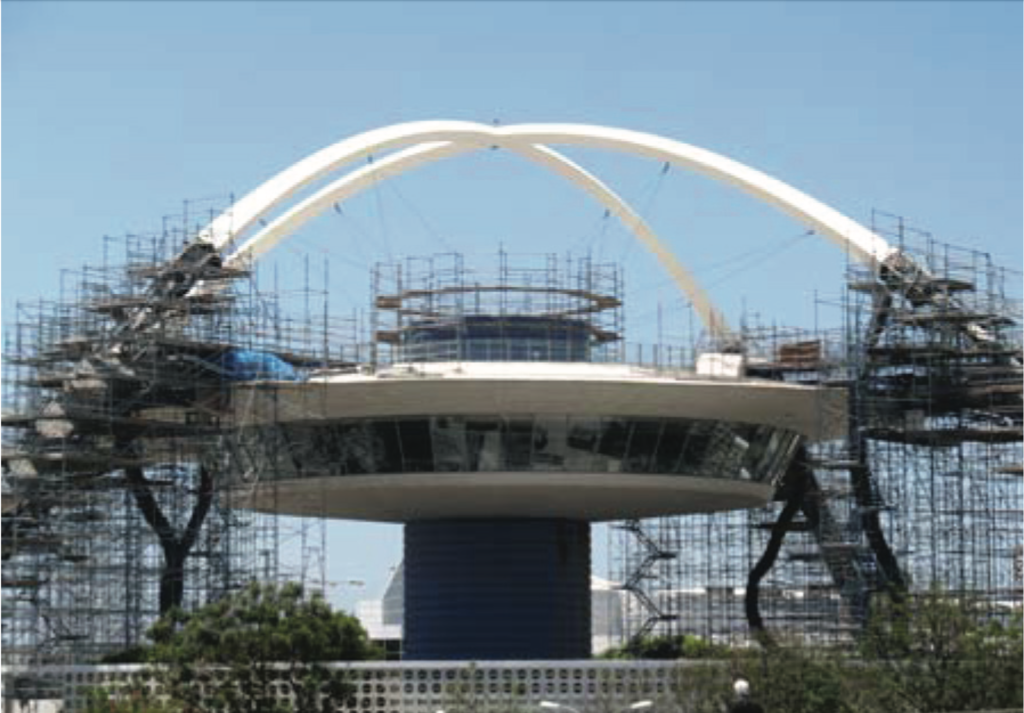
The conventional retrofit strategy would have altered the appearance of the Theme Building, so this team came up with a cutting-edge idea that would help the building withstand an earthquake without altering its original design. They installed a mass damper weighing 600 tons of steel on the central structure, on top of rubber bearings that helped control the movement. Additionally, eight shock absorbers, or fluid viscous dampers, were installed to absorb the movement of the steel and counteract earthquake motion. The 600 tons are divided into 22 layers (six plates of steel each). They also reinforced the surrounding screen wall with carbon fibre.
New Times, New Purpose
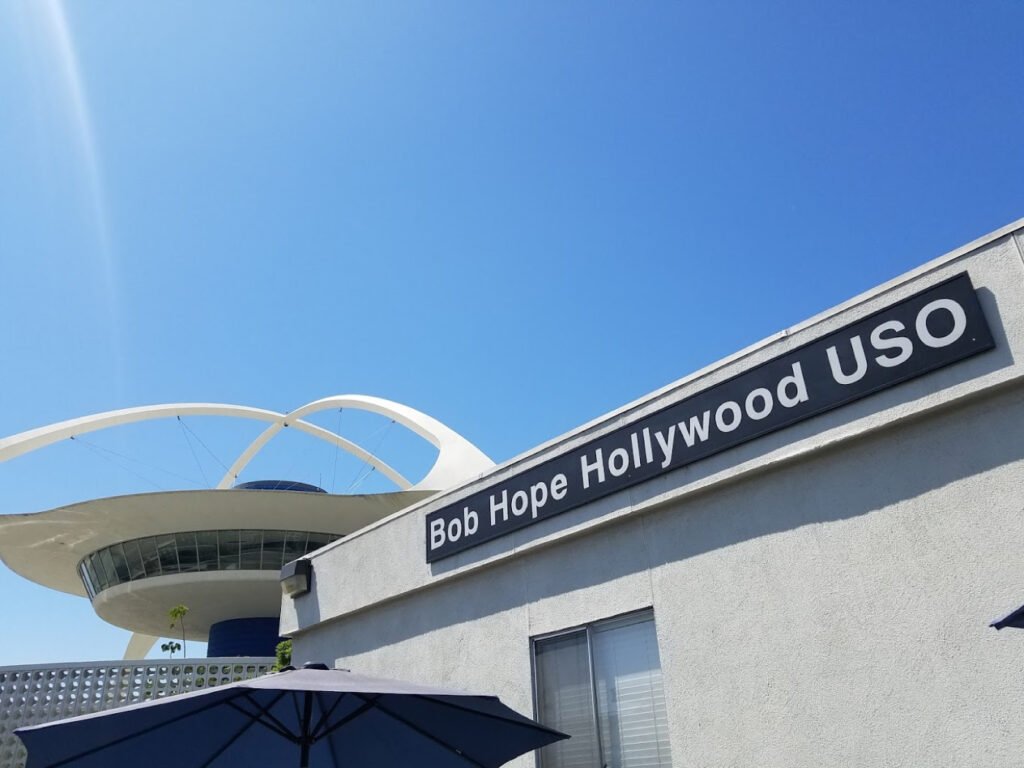
After this massive undertaking was completed, the Encounter Restaurant reopened with plenty of public interest. However, after a while it was no longer a novelty and closed permanently in 2013. The major cause was its location, which was inconveniently outside security for travellers and too far from the City of Los Angeles. The observation level reopened to the public on Saturdays and Sundays, and on the ground level, a new memorial to the victims of 9/11 was installed.
Since 2018, the Bob Hope USO Southern and Central California military members relocated to the ground floor of the Theme Building. The centre doubled the size of the airport’s former USO space has served about 8,500 military members and their families every month.
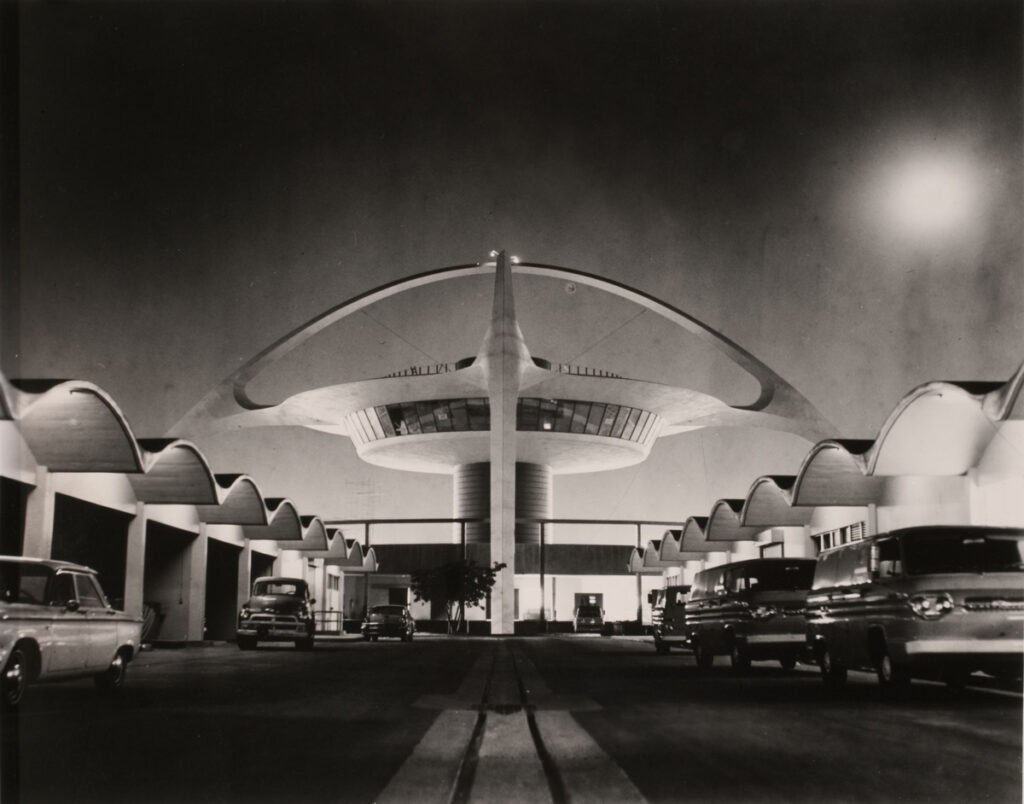
The Theme Building at LAX stands as a remarkable testament to mid-century modern design, combining sleek futuristic aesthetics with groundbreaking engineering. Its transformation from a bold vision into a beloved architectural landmark speaks to its lasting cultural impact. Over the decades, the building has evolved from a symbol of innovation to a historic monument, undergoing renovations that preserved its unique character while ensuring its structural integrity. Whether admired for its sci-fi appearance, its place in the city’s history, or its ongoing contributions to the airport and the military community, the Theme Building continues to captivate and inspire, remaining a quintessential piece of Los Angeles’ architectural legacy.
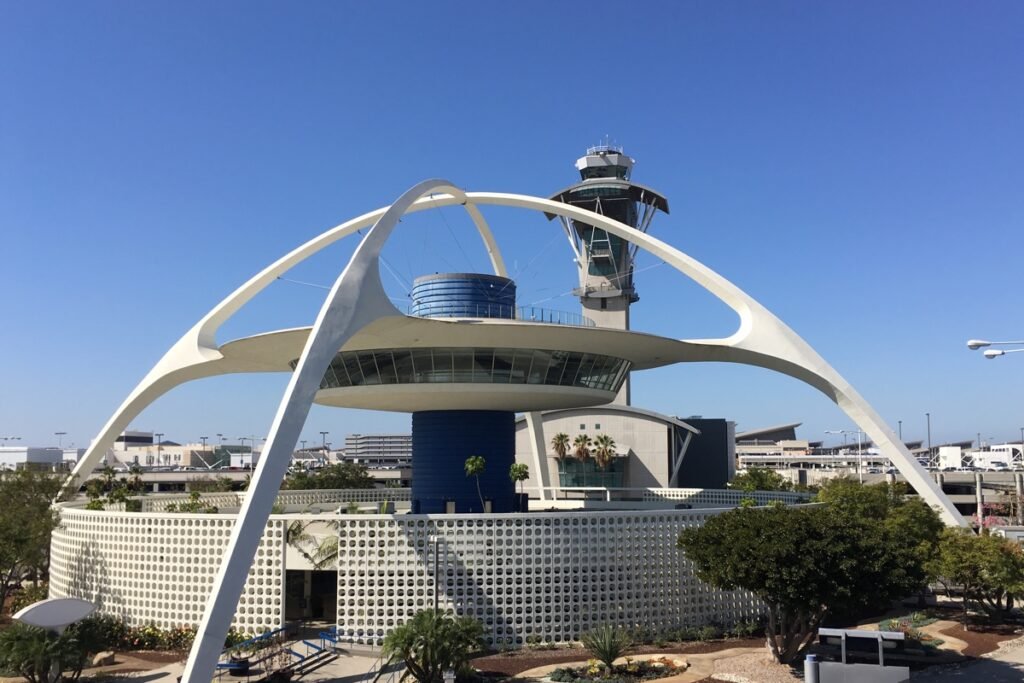
Image credits
Los Angeles World Airports
LAX Airport Archives
Sam Howzit
Stephen Enochia
Julius Shulman
Junkyardsparkle