

Eternal Beauty
Gander International Airport
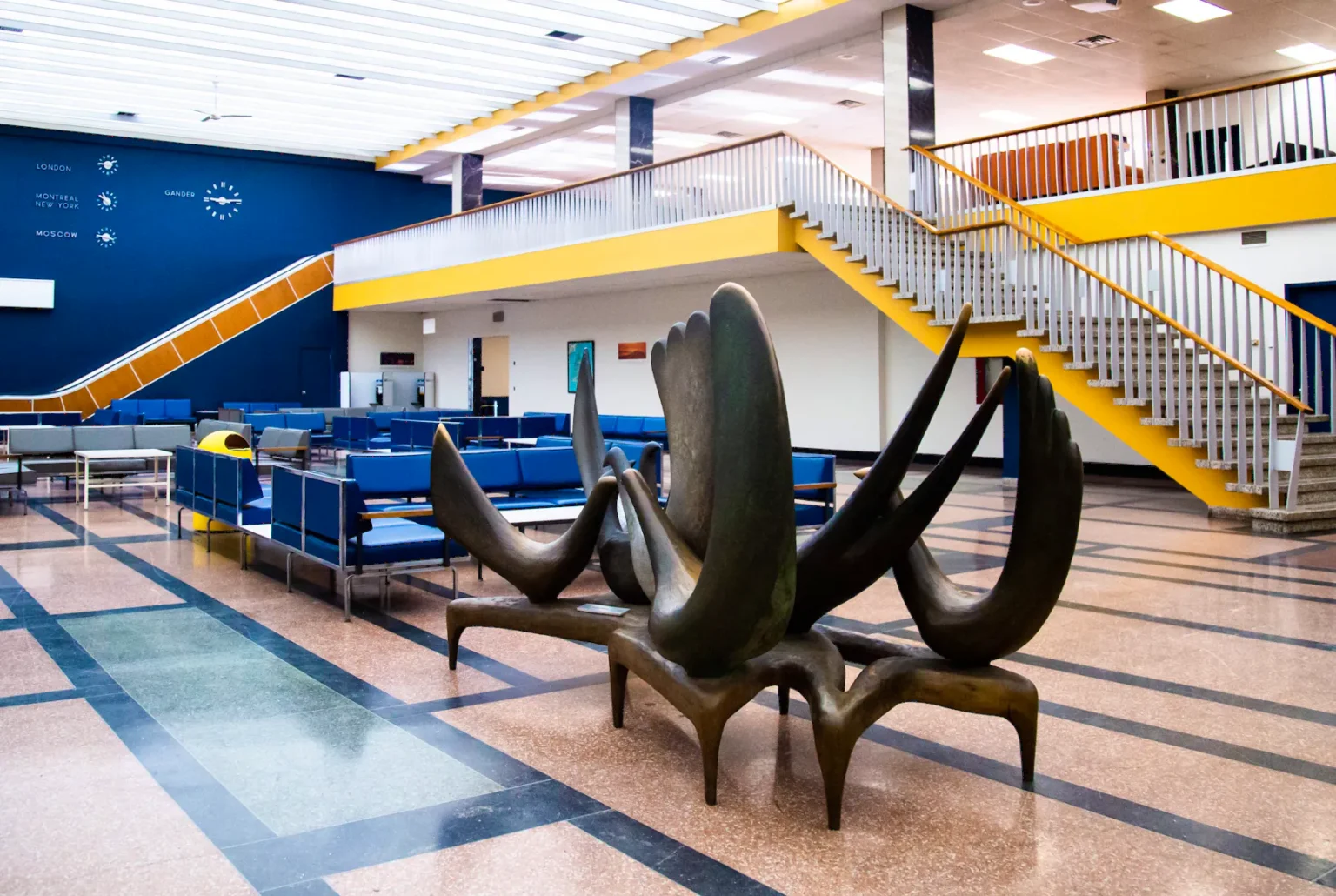
The first time I saw a photograph of Gander International Airport’s lounge area, my jaw dropped. I could not believe how beautiful this place was. I felt immediately transported to a time of great design, when airports weren’t simply about efficiency, but about creating beauty, comfort, and trendiness.
Tucked away in the rugged landscapes of Canada’s easternmost province, Newfoundland and Labrador, this terminal was and still is far more than a stopover. Gander International Airport is a great example of interior design elements, that together, reflect its timeless legacy.
I would like to mention that in 1938, when the first terminal was built, there was very little infrastructure in this area. It’s important to remember that the town of Gander exists because of this airport, not the other way around. To know its history is to know the people who have lived, worked, and loved this place since its beginnings.
Gander International Airport became one of the most important terminals in the world because all airlines operating transatlantic flights had to stop there to refuel, as aircraft did not have the range to reach their final destinations without a stopover. Gander was so popular that it became known as the Crossroads of the World.
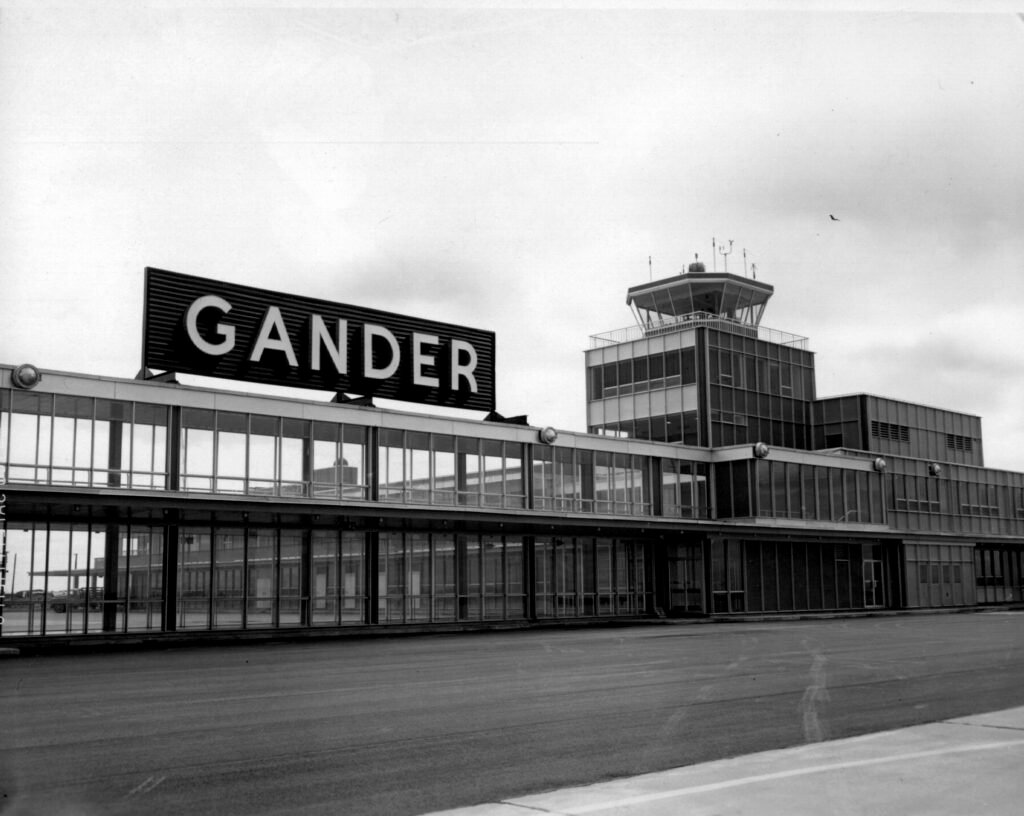
However, it wasn’t until the onset of World War II that the airport underwent a significant transformation. With the outbreak of the war, Gander played a pivotal role in transporting troops and supplies. In response to the growing demand, the airport underwent rapid expansion, but it wasn’t until after the end of the war than the new terminal was built. This coincided with the Massey Report, which encouraged the Canadian government to promote the country’s culture.
Finally, in 1959 was when the airport truly came into its own with the unveiling of a dazzling mid-century modern showpiece designed by Durnford, Bolton, Chadwick, and Ellwood. It wasn’t just a building, it was a vision, a place where sleek modern lines, cutting-edge furniture, and bold works of art came together to elevate air travel into something extraordinary. However, it was not merely the architectural structure that set Gander apart; it was the meticulousness in its interior design that truly distinguished it from its contemporaries. Gander International Airport was so significant at the time that Queen Elizabeth II, accompanied by Prince Philip, officially inaugurated the newly built terminal.
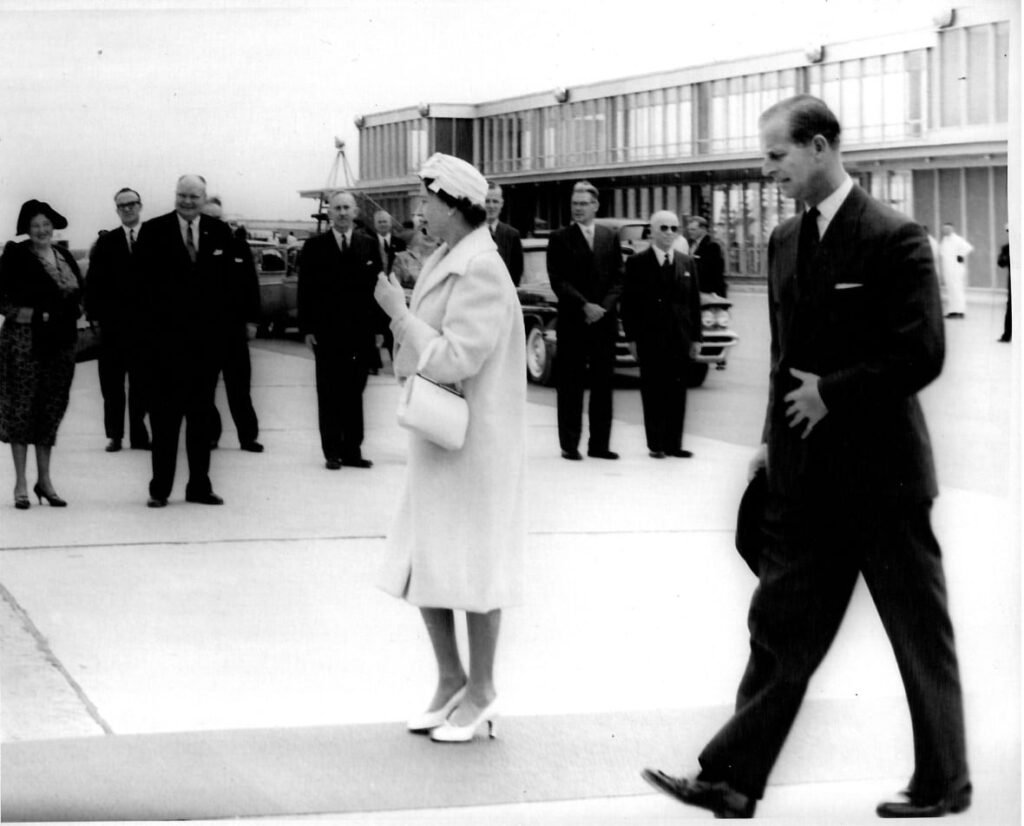
Queen Elizabeth and Prince Phillip on the day of the inauguration
The International Lounge
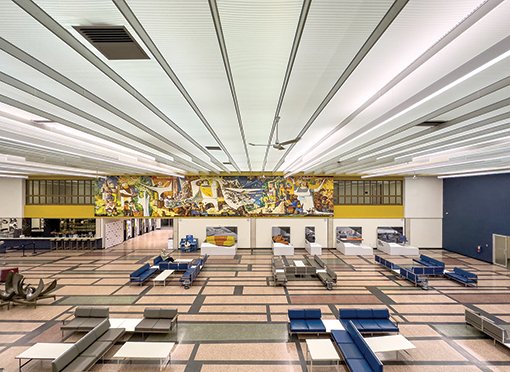
The exterior of the building featured clean, geometric lines, characteristic of most mid-century modern structures. However, the international departures lounge was the centrepiece of the airport. The spacious atrium, adorned with soaring ceilings and expansive windows, flooded the interior with natural light, creating an atmosphere of openness and tranquility.
The polished terrazzo floors, the art and beautifully crafted furniture were put in place with the comfort and convenience of passengers in mind. Every piece of furniture was carefully selected to complement the architectural vision, creating a harmonious blend of form and function.
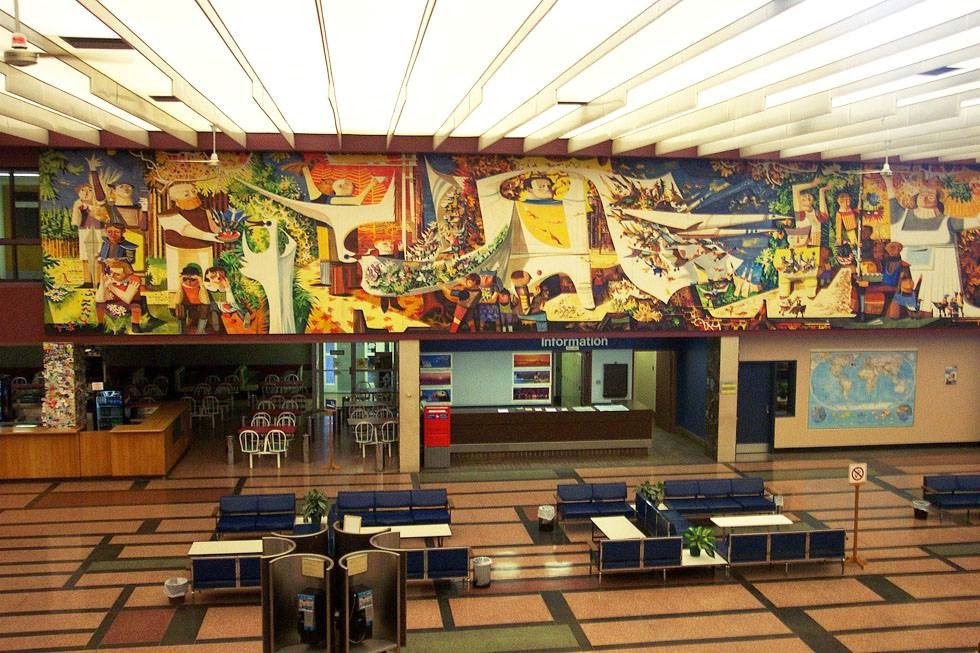
Flight and its Allegories by Kenneth Lochhead
The focal point of the lounge is a 72-foot (22-meter) mural, Flight and its Allegories, by Kenneth Lochhead, a founding member of the Regina Five, a group artists who helped bring modernism to Canada. The creation of this mural was no simple task. The paint was tempera, manually mixed using over 500 eggs, and applied to individual plywood panels, that were ordered from Montreal and airfreighted to Gander at great expense. This masterpiece inspired writer Jane Urquhart to use Gander Airport as the set for her novel, The Night Stages.
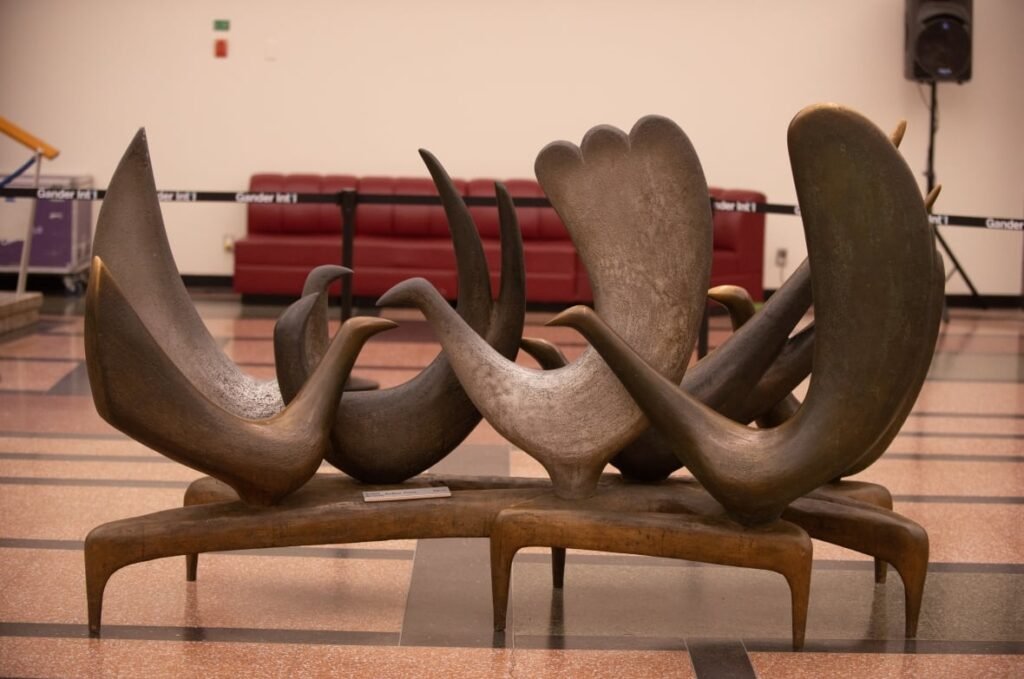
Arthur Price’s Birds of Welcome
Another notable work of art in the terminal is Arthur Price’s original Birds of Welcome sculpture. Cast in bronze and aluminum, the sculpture represents seven birds resembling ganders as a metaphor for the welcoming spirit of Canadians.
Robin Bush’s PrismaSteel seating system gave the lounge its sleek, geometric rhythm with modular sofas in cool blues and greys that could be almost endlessly rearranged. They were all manufactured by the Canadian Office and School Furniture (COSF).
The VIP Lounge
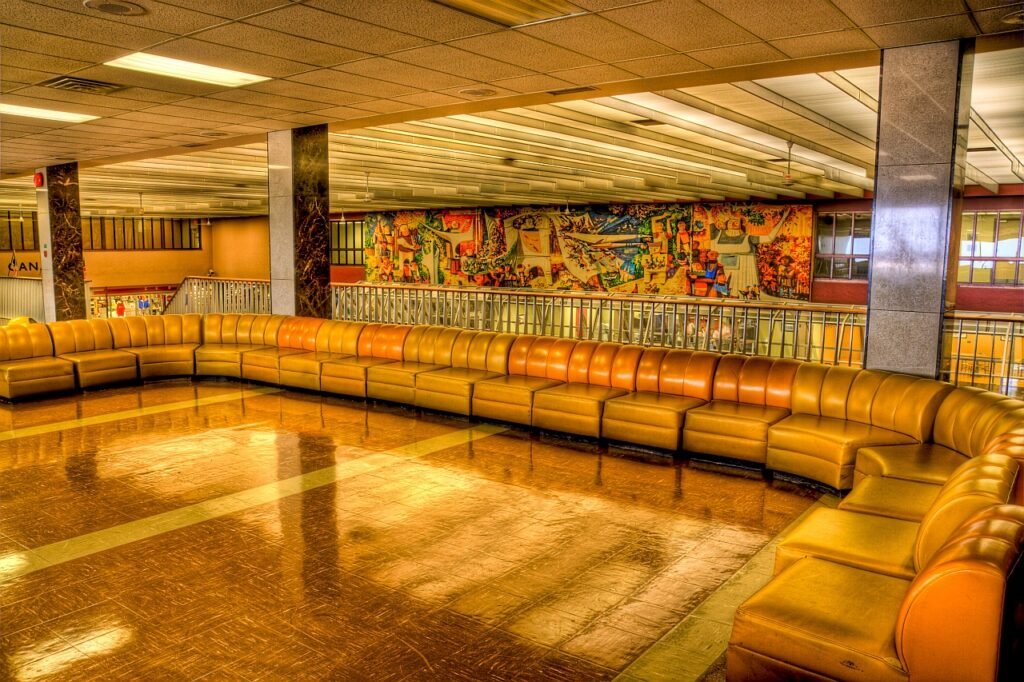
Yellow and orange leather sectional sofa by Klaus Nienkämper
The mezzanine-level VIP lounge hosted notable artists like Marilyn Monroe, Marlene Dietrich, Frank Sinatra, Elizabeth Taylor, Ingrid Bergman, Marlon Brandon, Elvis Presley and even The Beatles. Also important personalities like Albert Einstein and Jackie O, politicians such as Winston Churchill, Fidel Castro, and even royalty like the King of Sweden and the Empress of Iran. Accordingly, the attention to detail and exclusivity were reflected in the quality and design of the furniture.
This area featured yellow and orange leather sectional sofas created by German designer Klaus Nienkämper, who was recognized for helping introduce modern European furniture to Canada in the 1950s. There were also sleek black leather sofas, designed by Scandinavian-Canadian designer Chris Sorensen. The latter were custom-made for Gander International Airport and were never put into production afterwards.
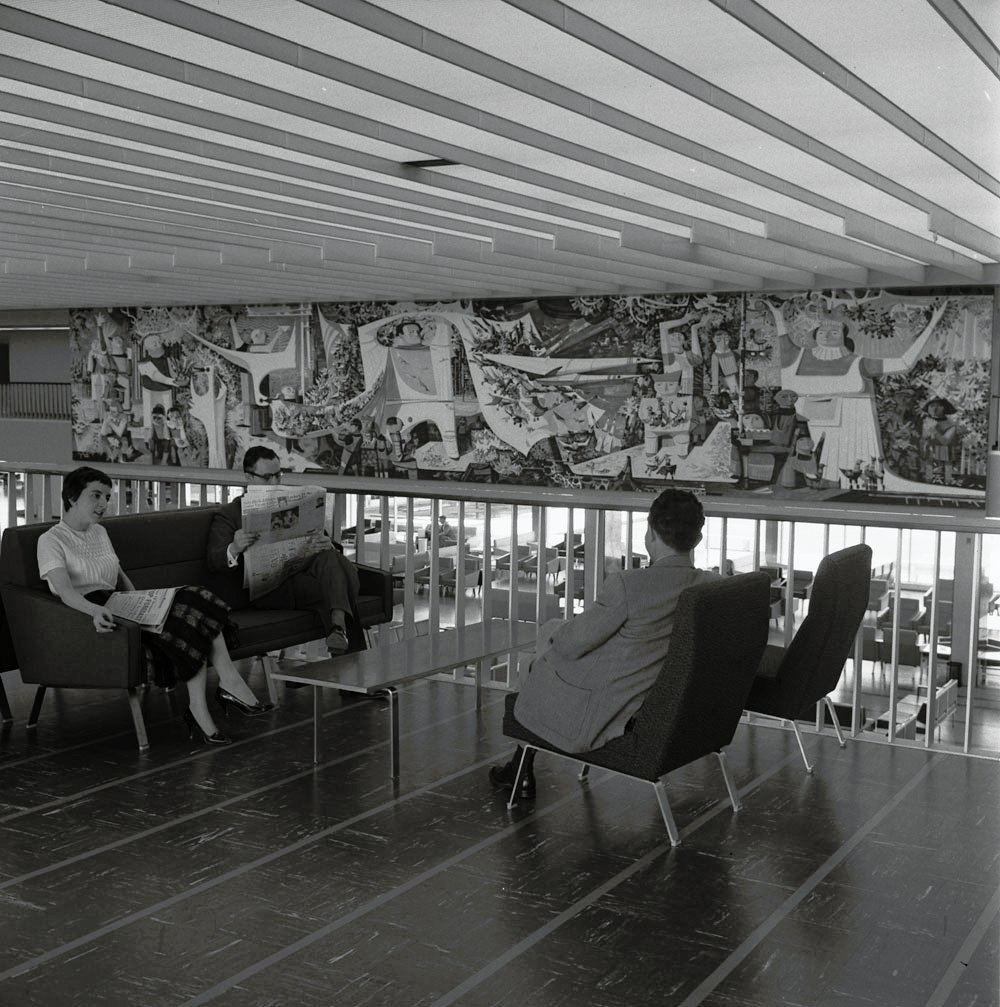
Black leather sofas by Chris Sorensen
At a certain point there were also some brown leather/wood armchairs pair with ottomans by French-Canadian designer Michael Guillaire, for Jacques Guillon et Associates, originally introduced at Expo 67 in Montreal so I assume these pieces might have not been part of the original airport design.
The Bar and Other Spaces
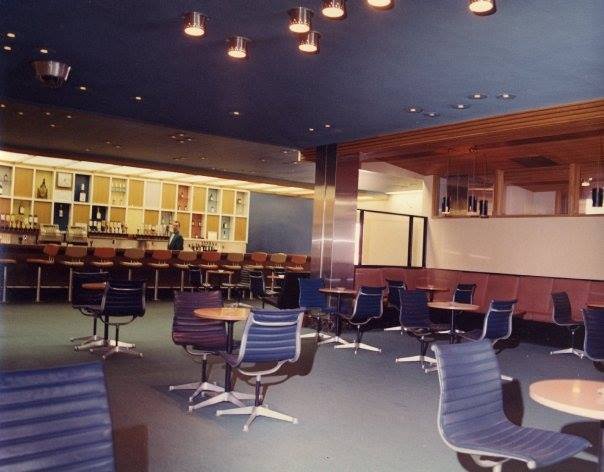
Aluminum Group furniture by Ray and Charles Eames
The bar featured the cutting-edge aluminum group chairs and tables designed by Ray and Charles Eames, and the bathrooms were furnished with molded plastic chairs also from the Eameses.
The Danish architect and designer Arne Jacobsen is frequently mentioned in connection with Gander International Airport, though it is unclear which specific pieces he contributed with.
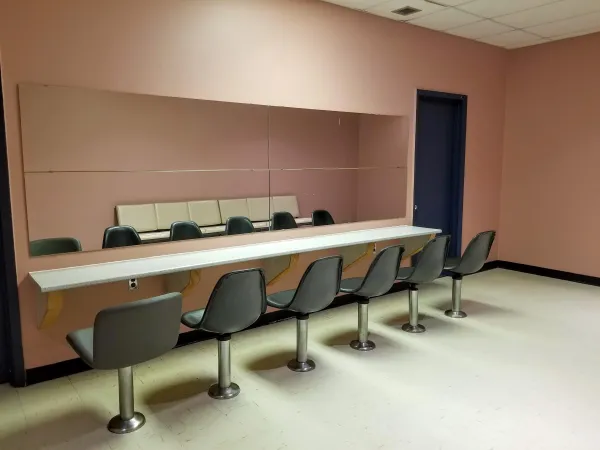
Molded plastic chairs by Ray and Charles Eames
The Struggle to Survive
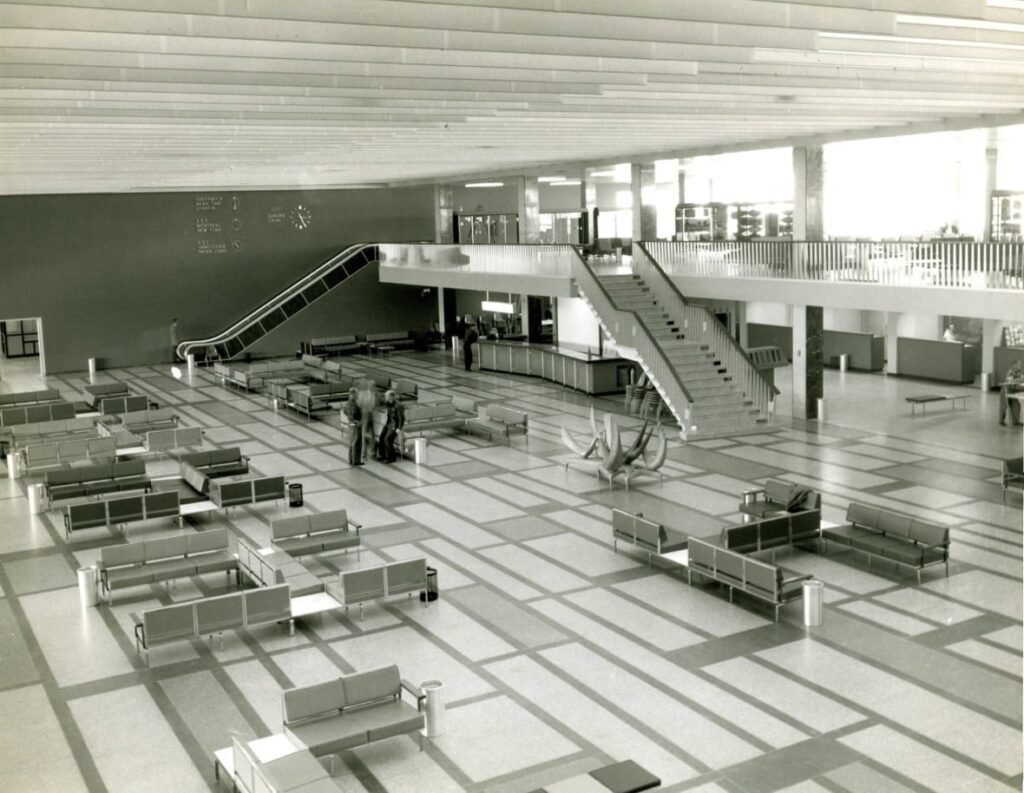
For a while, Gander was everything the Jet Age promised. However, when the jets themselves came, especially the Boeing 707s and the DC-8s, that could cross the Atlantic without refuelling. Suddenly, Gander’s strategic importance began to fade.
In 2014, there was a proposal to close the airport, but a major rally was held at Newfoundland’s Hotel Gander with a 400-strong action committee, along with the airport authority, to persuade the Canadian federal government to help preserve the building. This movement attracted the attention of architects, art historians, and design aficionados, all of whom supported the idea.
Preserving the Legacy
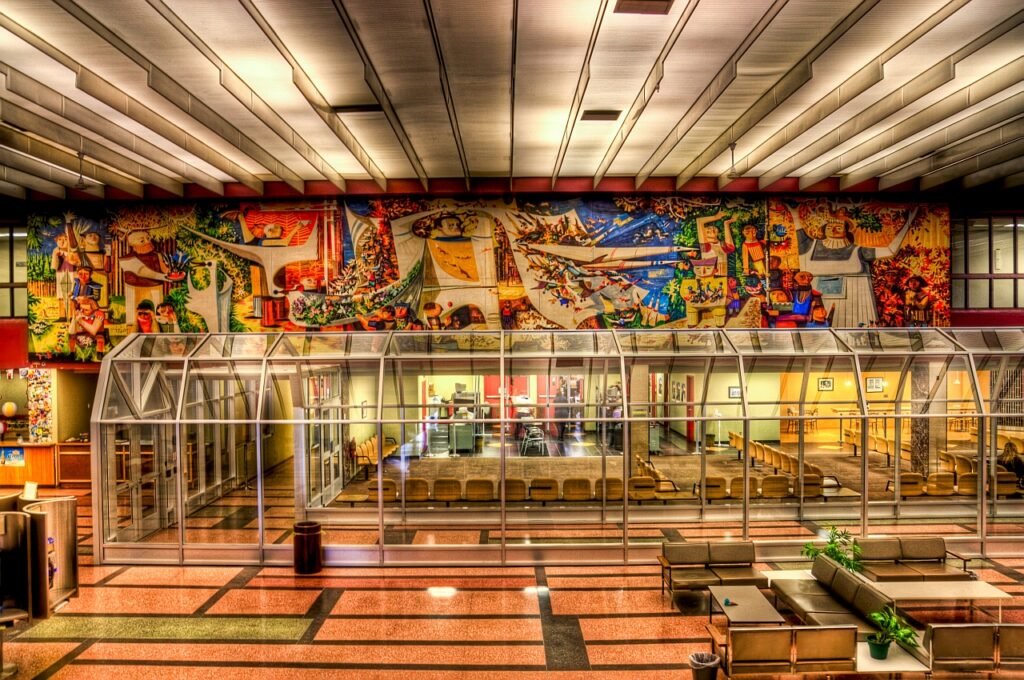
Glass and aluminum corridor adition
Fortunately, in January 2015, the Gander International Airport Authority unveiled a model for the new terminal, confirming that the departures lounge, along with all its murals and sculptures, would remain intact. Only an enclosed glass and aluminum corridor was added for security reasons.
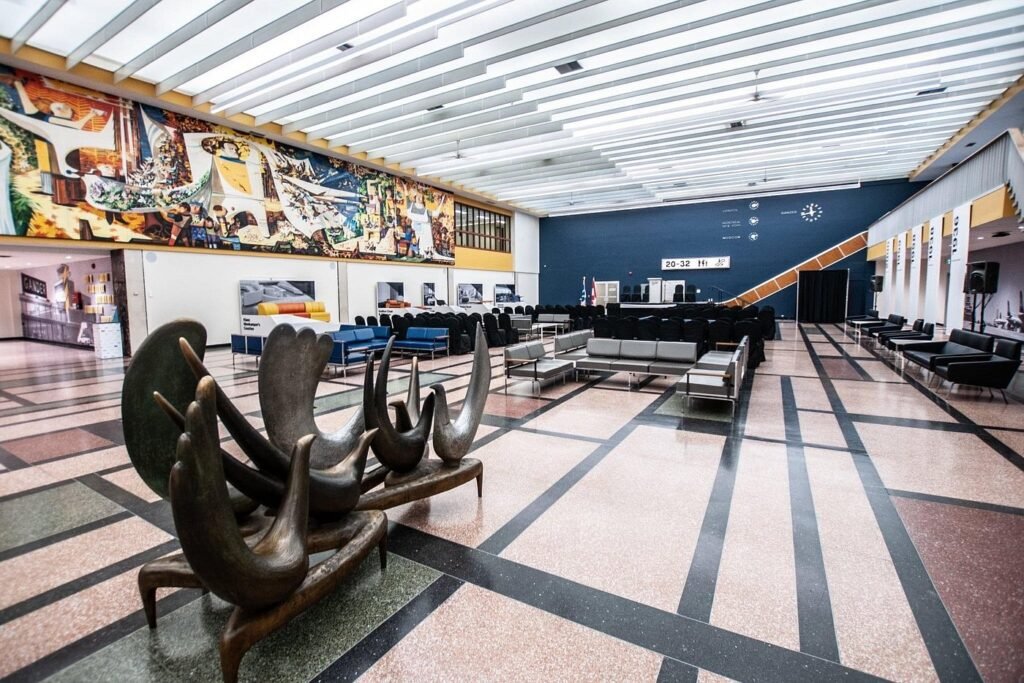
Terminal-Museum renovation by Fanthom
Later in 2022, a careful renovation led by design firm Fathom ensured that the airport’s essence remained intact: a space that feels both modern and timeless, honouring its legacy while still serving travellers today.
Over the decades, Gander International Airport has witnessed many changes, but its mid-century modern aesthetic and vibrant collection of art and furniture continue to captivate and inspire all who pass through its doors. As a living time capsule of aviation history, this beautiful building remains a beacon of artistic excellence amidst the ever-changing landscape of air travel.
Image credits
Gander International Airport
The Gander Airport Historical Society
Fathom Studio
Canadian architecture archives
Gar Luney
Ryan Khatam
Les Grettel – Alliance Aviation
Debi Lander
NOTE: If you own any of the visual material displayed on this article and I haven’t mentioned it, please let me know to include it.